

Limits of freedom of expression vs the right to a reputed trade mark
Is freedom of expression a carte blanche for the use of another party’s logo, and can it constitute a “due cause” for the use of a sign that is identical or similar to a reputed trade mark?
The CJEU judgment of 8 September 2026 in Case C-298/23 (Inter IKEA Systems) is the first ruling of the Court to directly address the issue of parody in the context of trademark rights. The judgment clarifies the criteria for balancing fundamental rights in cases involving political parody of a brand’s image and delineates the boundaries of freedom of expression when it comes into conflict with the protection of industrial property.
The CJEU judgment of 8 September 2026 in Case C-298/23 (Inter IKEA Systems) is the first ruling of the Court to directly address the issue of parody in the context of trademark rights. The judgment clarifies in general the criteria for balancing competing interests in cases involving political parody of a brand’s image, namely fundamental rights and trademark rights.
Facts of the case
The parties to the dispute were Inter IKEA Systems BV (a Swedish company engaged in the manufacture and sale of furniture) and Algemeen Vlaams Belang VZW (a Belgian political party). Vlaams Belang presented a proposal for reform of immigration and asylum policy entitled “IKEA-PLAN – Immigratie Kan Echt Anders” (“IKEA Plan – Immigration Can Really Be Different”).
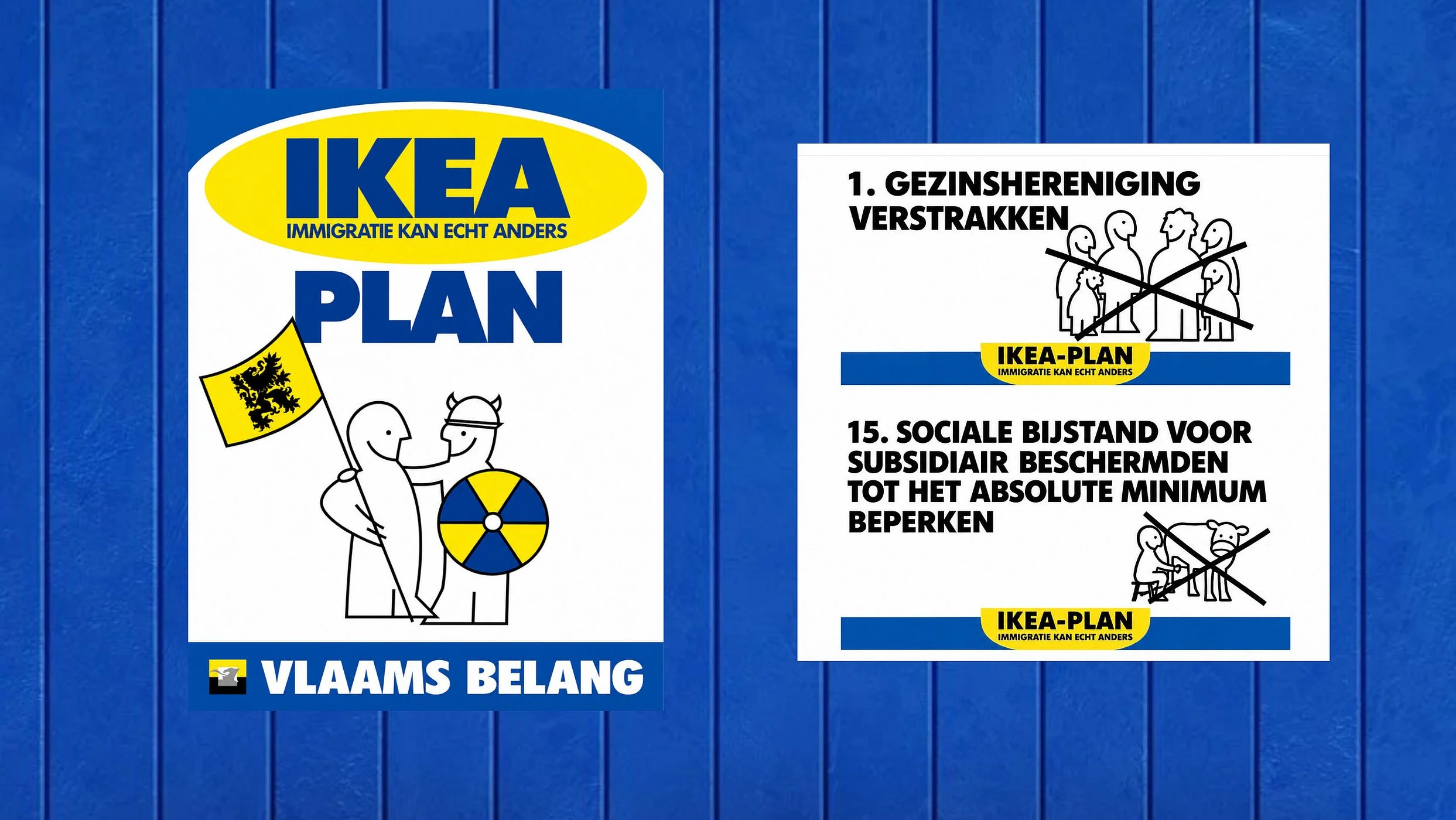
Source: https://www.lto.de/recht/nachrichten/n/eugh-zu-markenparodie-ikea-parodie
It set out policy proposals described as “ready to be assembled” Promotional materials published on the party’s social media channels used symbols corresponding to IKEA trade marks, as well as characters resembling those featured in IKEA assembly instructions.
IKEA alleged that the defendants had infringed its exclusive rights in its reputed trade marks. It argued that the unlawful use of its brand, distinctive visual identity, colour scheme and motifs from its assembly instructions as part of the anti-immigration political campaign (“IKEA-PLAN”) resulted in the taking of unfair advantage of the reputation of its trade marks and could cause significant damage to the company’s image and reputation. Vlaams Belang acknowledged that it had used IKEA trade marks without the owner’s consent to strengthen the political message and broaden its reach. It nevertheless argued that the right to freedom of expression, including the freedom to express political opinions and engage in political parody, should take precedence over IKEA’s rights and interests and constituted a “due cause” for the use of those marks.
Consequently, the court in Brussels referred questions to the CJEU for a preliminary ruling. The questions concerned whether freedom of expression, including the freedom to express political opinions and political parody, can constitute a “due cause” for using a sign identical or similar to a reputed trade mark, and what criteria a national court should take into account in assessing the balance between the intellectual property rights of the trade mark proprietor and the freedom of expression of a third party.
Judgment
The Court expressly clarified that freedom of expression, including the freedom to express political opinions and engage in political parody, may constitute a “due cause” for the use of a sign that is identical or similar to a reputed trade mark within the meaning of EU law. However, this right is not absolute, and its application requires the national court to carefully balance the conflicting fundamental rights — on the one hand, the intellectual property rights of the trade mark proprietor and, on the other, the freedom of expression of the party using the mark.
As regards the criteria for assessment, the CJEU indicated that the national court must examine, above all, the intentions of the third party and whether that party acted in good faith. The Court emphasised that use of a mark motivated solely by the intention to take unfair advantage of its reputation or to cause detriment to it does not constitute a due cause. The Court held that detriment to the distinctive character of a reputed trade mark occurs where the ability of the mark itself to identify the goods or services concerned is weakened. By contrast, detriment to the reputation of a mark arises where the way the third party uses the sign may cause consumers to perceive it in such a way that the mark’s power of attraction is diminished. Unfair advantage, commonly referred to as parasitism or free-riding, consists in deriving benefit from the prestige and investment made by the trade mark proprietor without incurring any costs. Importantly, such an advantage is unlawful even where the use of an identical or similar sign does not cause detriment to the reputation of the mark concerned or, more generally, to its proprietor.
As regards the impact on the reputation of the brand, the CJEU observed that, although parody is by its very nature intended to provoke, the trade mark proprietor is not required to tolerate use that causes it disproportionate harm. Relevant factors in this regard include the intensity and extent of the use of the sign (for example, through its repeated dissemination online) and the degree of similarity. The Court paid particular attention to the risk of creating a false impression among consumers that the trade mark proprietor — whose business is based on political neutrality — shares or supports the political ideas being promoted.
Summary
For many years, there has been a lively debate in legal doctrine and practice regarding the boundaries of parody in trademark law. The judgment in the Inter IKEA Systems case serves as an extremely important milestone, as it constitutes the first official interpretation by the CJEU concerning the concept of due cause in the context of parodying a reputed trademark.
It is worth recalling that as early as the drafting stage of the EU trademark law reform and the creation of the new directive in 2015, proposals were put forward to explicitly introduce parody into trademark legislation. Ultimately, these provisions were not included in the final text of the directive; therefore, this CJEU judgment may mark the beginning of a long path toward regulating this issue through case law.
The ruling itself provides guidelines that, while general, appear highly reasonable. A situation in which a political party uses a reputed trademark merely to „enrich” its political message and artificially expand its reach can hardly be considered justified. The appropriation of a brand’s image by a political entity infringes upon fundamental interests — a company such as IKEA has the right to protect its political neutrality and avoid association with any partisan ideologies.
A significant systemic nuance is also worth noting. Polish industrial property law traditionally regulates protection of trade marks in situations where a third party uses a mark as a trademark (i.e., to distinguish its own goods or services). Conversely, the legislation of the Benelux countries contains provisions protecting trademarks against use without due cause for purposes other than distinguishing goods and services. The CJEU did not decide whether the use of the IKEA logo by the political party constituted use as a trademark, leaving this assessment to the referring court (the Benelux court). The ultimate decision of the national court on this matter will be particularly interesting, as it will demonstrate the extent to which traditional trademark frameworks can stretch into the public and political spheres unrelated directly to commercial activity.

Zobacz też:
Forma umowy o przeniesienie praw autorskich a prawo właściwe. Wyrok TSUE z 24 września 2026 r., C-176/25 (Steizer)
W wyroku TSUE z 24 września 2026 r. w sprawie C-176/25 Steizer Trybunał rozstrzygnął, które prawo jest właściwe dla oceny ważności ze względu na zastrzeżoną formę szczególną umowy przenoszącej lub licencjonującej prawa autorskie. Stan faktyczny BT prowadzi w Niemczech...
Przegląd orzecznictwa TSUE od 21.09 do 25.09.2026
Wyrok – 23/09/2026 – Bitmain Technologies przeciwko EUIPO - Advanced New Technologies (ANTMINER), Sprawa T-409/25 Wcześniejszy znak Znak sporny ANT ANTCHAIN (Uprawniony: Advanced New Technologies Co. Ltd) ANTMINER (Uprawniony: Bitmain Technologies Inc.) – Sprawa...
Czy krótki wpis w mediach społecznościowych może być utworem? Wyrok TSUE z 3 września 2026 r. w sprawie C-598/24, CY przeciwko Gândul Media Network i HO
Wyrok TSUE z 3 września 2026 r. w sprawie C-598/24 (CY przeciwko Gândul Media Network i HO) dotyczy dwóch praktycznych kwestii. Pierwsza to granice pojęcia „utworu" w rozumieniu Dyrektywy 2001/29 w odniesieniu do tekstów publikowanych w sieci społecznościowej. Druga...