

Overview of CJEU case law from 7 to 13 July 2025
Below we present an overview of CJEU case law concerning intellectual property for the period from 7th to 13th July 2025.
- T-1170/23 – Spin Master Toys UK v EUIPO – Verdes Innovations (Forme d’un cube avec des faces ayant une structure en grille)
– The case concerned invalidity proceedings against a three-dimensional trade mark (a sign consisting exclusively of the shape of the goods, which is essential to obtain a technical effect).
– Verdes Innovations SA filed an application for invalidation of the three-dimensional trademark EUTM 9975681: 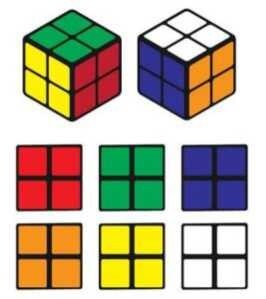 (Class 28: ‘Toys, games, toys and puzzles, three-dimensional puzzles’; Class 35: ‘Advertising and promotion services for the goods and services of others in print media, on billboards and on television’; Class 41: ‘Education; Training; Entertainment; Sporting and cultural activities’) registered in favour of Spin Master Toys UK Ltd.
– Various grounds for invalidity were raised, including that the sign consists exclusively of the shape of the goods or other characteristics necessary to achieve a technical effect.
– The Cancellation Division suspended the proceedings pending a final decision on the application for cancellation of EU three-dimensional trademark No. 162784  filed by Simba Toys: . The trademark was invalidated and the proceedings were resumed.
– The Cancellation Division partially upheld the application for cancellation of the contested trade mark in respect of goods in Class 28 on the basis of Article 7(1)(e)(ii) (i.e. the sign consists exclusively of the shape of the goods or of other characteristics necessary to achieve a technical effect). The application was rejected in relation to services in classes 35 and 41.
– The applicant filed an appeal insofar as the trademark was invalidated for goods in class 28.
– The Board of Appeal dismissed the appeal. In particular, it found that the colours of the squares on each side of the cube were an essential feature of the contested trade mark and formed an integral part of its shape. It found that the combination of these six different colours is necessary to achieve the technical effect. It also found that the trade mark was registered in breach of Article 7(1)(e)(ii) of Regulation No 207/2009 in respect of all the goods covered by the application in Class 28.
– The CJEU dismissed the appeal. It agreed with the Board of Appeal, among other things, that six different colours of squares on each side of the cube are necessary to achieve the technical effect.
Details of the case:
- T-74/24 – Seedless Gold International SL v EUIPO – Ángel Teresa Hermanos SA
– The case concerned an application for the transfer of Community plant variety rights.
– Ángel Teresa Hermanos, SA, applied for Community plant variety rights for the variety Queen of the species Citrus Reticulata Blanco. In the form dated 12 April 2006, Renán de Teresa Almenara was appointed to represent the company before the CPVO.
– The CPVO accepted the application for protection of the Queen variety and registered it under number 33910.
– Renán de Teresa Almenara informed the CPVO of its intention to submit an application for amendment of the entry in the register. The CPVO informed them that they should use form ‘Option B’ entitled ‘Transfer of an application or entry in the register […]’.
– Renan then submitted an application to the CPVO for registration of the transfer of protection of the Queen variety from Ángel Teresa Hermanos, SA to Seedless Gold International, SL. The email included a certificate drawn up by Mr Renan confirming the general meeting of Seedless Gold International, SL in the form of a notarial deed.
– Mr Renan signed the form provided by the CPVO both as the representative of the transferor of the Queen variety protection and as the representative of the transferee.
– The CPVO issued a decision updating the register and changing the right holder.
– Ángel Teresa Hermanos, SA sent an email to the CPVO stating that it did not consent to the transfer of protection for the Queen variety and subsequently submitted a letter requesting that the amendment be deleted from the register.
– Ángel Teresa Hermanos, SA informed the CPVO that it had filed a criminal complaint against Mr Renan.
– The CPVO announced that it had issued a decision to register the transfer and to suspend the proceedings for the cancellation of the transfer registration.
– Ángel Teresa Hermanos, SA appealed against the decision to register the transfer.
– The Board of Appeal upheld the appeal brought by the intervener and annulled the decision to register the transfer. The Board of Appeal also considered it appropriate to amend the relevant data in the register concerning the protection of the Queen variety so that the intervener was indicated as the holder of that protection.
– The CJEU dismissed the action. It pointed out that the CPVO had not fully complied with its duty of care prior to registering the transfer of protection for the Queen variety.
Details of the case:
- T-121/24-T-127/24 and T-129/24 – Guangzhou Wanglaoji Grand Health Co. Ltd v EUIPO – Multi Access Ltd
– The case concerned invalidity proceedings (figurative marks representing three Chinese characters)
– Multi Access Ltd (intervener) registered the following trade marks: 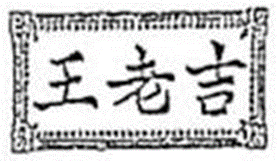 ;
;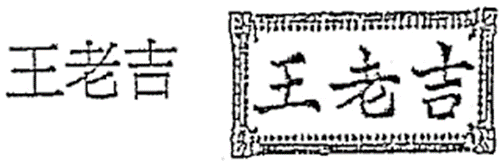 ;
;  ; WANG LAO JI. The goods and services for which registration was sought belong to classes 5, 29, 30, 32, 33 and 35.
– Guangzhou Wanglaoji Grand Health Co. Ltd filed applications for invalidation of the above trademarks on the grounds of bad faith.
– The Cancellation Division dismissed the applications.
– The Board of Appeal dismissed the appeals. Both the applicant and the intervener claimed that they were the legitimate owners of the trademark consisting of three Chinese characters 王老吉 (‘three Chinese characters’), the Latin transliteration of which in Mandarin is ‘wang lao ji’. The applicant and the intervener did not dispute that in 1913 the use of the trademark consisting of three Chinese characters was divided between, on the one hand, the branch of which the applicant is the successor, which obtained the rights to the trademark in mainland China, and, on the other hand, the branch of which the intervener is the legal successor, which was granted the rights to the trademark in Hong Kong (China). In the Chamber’s view, there was nothing to suggest that the division of markets between the applicant and the intervener in 1913 prevented the intervener from legally registering and using the contested trademarks in the European Union.
– The CJEU dismissed the appeal. The intervener’s intention at the time of registration of the contested trade marks was part of a normal commercial strategy, particularly in view of the fact that it was the legitimate owner of trade marks consisting of three Chinese characters in Hong Kong and that it had not been proven that it was unable to extend its rights to other jurisdictions.
Details of the case:
- T-144/24 – Bouwbenodigdheden Hoogeveen BV v EUIPO – Sören Pürschel
– The case concerned revocation proceedings.
– Sören Pürschel filed an application for a declaration of invalidity of the word markBIENENBEISSER in class 6: ‘Metal construction materials, including ventilation inlets; metal products and small metal products, including ventilation inlets; goods made of base metals not included in other classes, in particular ventilation inlets’; class 19: ‘Non-metallic construction materials, including ventilation inlets’.
– The Cancellation Division partially upheld this request and declared the right to the disputed trademark to have expired in relation to „metal construction materials, except for ventilation inlets; metal products and small metal products, except for ventilation inlets” belonging to class 6 and all goods belonging to class 19 designated by the disputed trademark
– The applicant filed an appeal against the decision of the Cancellation Division, requesting that the decision be annulled insofar as it declared that the applicant’s rights to the contested trade mark had expired in relation to “non-metallic building materials, namely ventilation inlets” belonging to class 19. The Board of Appeal dismissed the appeal.
– The CJEU upheld the appeal. The Board of Appeal failed to examine whether the metal and non-metal ventilation inlets covered by the disputed trade mark could belong to the same homogeneous category of goods and did not verify the criteria for defining a homogeneous category of goods.
Details of the case:
- T-291/24 – Sumol + Compal Marcas, S.A. v EUIPO – Krynica Vitamin S.A.
– The case concerned opposition proceedings on the grounds of likelihood of confusion
– Krynica Vitamin SA registered a trademark:  (class 32: Non-alcoholic beverages)
– Sumol + Compal Marcas, SA filed an opposition based, inter alia, on the word and figurative mark:  (class 32);
– The Opposition Division rejected the opposition, and the Board of Appeal dismissed the appeal.
– It was pointed out that the trademarks show little visual similarity, at most below average phonetic similarity, and differ in terms of concept.
– The CJEU dismissed the appeal. It emphasised that the identity of the goods, combined with any degree of visual and phonetic similarity, does not automatically give rise to a likelihood of confusion or association.
Details of the case:
6. T-304/24 – sprd.net AG v EUIPO
– The case concerned a refusal of registration on the grounds of lack of distinctive character
– sprd. net AG registered the following figurative mark: 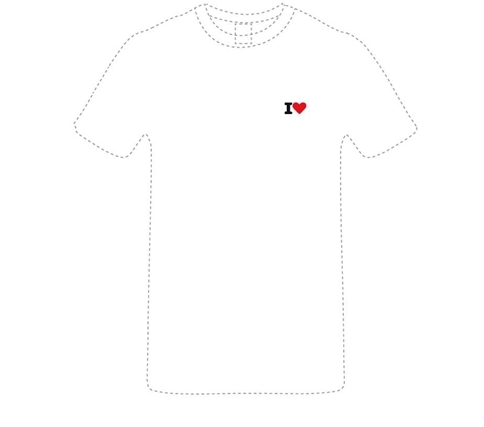 (class 25 – ‘clothing, namely outerwear, in particular T-shirts, sweatshirts and sweaters’);
– The EUIPO examiner rejected the application.
– The Board of Appeal dismissed the appeal. It pointed out that the trademark applied for lacked distinctive character. The classification of the sign applied for as a ‘position mark’ does not allow its distinctive character to be established. Even if the sign was placed on the left side of the chest, it would not be recognised by the relevant public as an indication of origin. Such a trivial sign, devoid of distinctive character, would immediately be understood as the expression ‘I like’. It would not be perceived as an indication of origin, even if it were placed in a location where the trademark is frequently, but not exclusively, placed by the manufacturers of the goods in question.
– The CJEU dismissed the appeal.
Details of the case:
7. T-347/24 – Target Brands Inc. v EUIPO – Polipol Polsermöbel GmbH & Co. KG
– The case concerned invalidity proceedings on the grounds of lack of distinctive character of a trade mark.
– Polipol Polstermöbel GmbH & Co. KG filed an application for invalidation of the figurative mark by Target Brands, Inc.  (clas 35, 42).
– The Cancellation Division rejected the application for a declaration of invalidity.
– The Board of Appeal annulled the decision of the Cancellation Division and declared the contested trade mark invalid on the ground that it was devoid of any inherent distinctive character. The trademark was a simple reproduction of two banal and simple geometric shapes and would be perceived as a red circle (dot) inscribed in a red circle outline on a white background.
– The CJEU dismissed the action.
Details of the case:
8. T-407/24 – AirPlus International GmbH v EUIPO – Alpian SA
– The case concerned opposition proceedings (likelihood of confusion).
– Alpian SA registered a word and figurative trademark:  (class 36).
– AirPlus International GmbH filed an opposition to the above application based, inter alia, on an earlier trademark:  (class 9, 35, 36, 38 and 42)
– The Opposition Division rejected the opposition and the Board of Appeal dismissed the appeal.
– It was pointed out that the visual differences between the conflicting signs outweigh their common visual, phonetic and conceptual characteristics resulting from the combination of a letter and a symbol, which in itself had a low degree of distinctive character.
– The CJEU dismissed the appeal.
Details of the case:
9. C-322/24 – Sanchez Romero Carvajal Jabugo S.A.U. v Embutidos Monells S.A.
– The judgement has been discussed in detail in our article: https://zglegal.pl/the-lapse-of-time-does-not-affect-the-assessment-of-bad-faith/
10. C-365/24 – Purefun Group AB v Doggy AB
– The case concerned a preliminary question regarding Directive 2015/2436, which aims to harmonise the laws of Member States relating to trademarks, and Articles 34 and 36 TFEU.
– Doggy, a Swedish company, is a manufacturer of, among other things, dog food. It is the owner of the company name “Doggy AB” and the word mark DOGGY, registered in Sweden in class 31.
– Purefun Group AB (hereinafter “Purefun”) is a Swedish company whose business includes the retail sale of dog food, including dog food and treats. It sells its products on its website under the domain name “doggie.se” and uses the sign “DOGGIE” in the course of its business.
– Doggy brought proceedings against Purefun seeking, first, an order prohibiting Purefun from using the sign “DOGGIE” and, second, payment of damages.
– The court of first instance upheld Doggy’s claims on the grounds that there was a likelihood of confusion, firstly, with regard to the trademark and the company name of that company and, secondly, with regard to the designation “DOGGIE” used by Purefun.
– Purefun filed an appeal.
– The referring court considers whether the protection afforded by the provisions of the Trade Marks Act and the Trade Names Act is compatible with Directive 2015/2436 and, more generally, with the principle of the free movement of goods. It considers that, while this ‘cross-protection’ affords the owner of a company name protection analogous to that afforded to a trade mark, it is not subject to the same strict requirements as those applicable in that field. The referring court points to two differences in this regard: (i) the lack of genuine use of a trade mark in relation to the goods or services for which it was registered may lead to the expiry of the exclusive rights of its proprietor, whereas Swedish law does not provide for any equivalent provision in relation to company names; (ii) in order to determine whether a sign is used in relation to goods or services identical to those for which the trade mark was registered, reference should be made to the classification system established by the Nice Agreement, whereas in the field of company names, the assessment of the likelihood of confusion is made in relation to the activities to which the company’s business relates, which may be defined in a broad manner.
– The referring court therefore considers that it is possible thatthe protection afforded to company names by Swedish law is broader than that provided for in Directive 2015/2436 in relation to trade marks, which could affect the free movement of goods and the freedom to provide services.
– The CJEU ruled that:
Directive (EU) 2015/2436 of the European Parliament and of the Council of 16 December 2015 to approximate the laws of the Member States relating to trade marks, and Articles 34 and 36 TFEU,
must be interpreted as not precluding a national system which provides, first, that the exclusive right conferred by a company name allows its proprietor to prohibit a third party from using an identical or similar sign, as a trade name or as a domain name, for goods or services which are identical or similar to those falling within the scope of activities for which its company name is registered, and, second, that failure to use that company name may, under certain conditions, lead to the revocation of that exclusive right and that the proprietor is required to describe and limit the nature of the activities falling within its object with sufficient precision to enable third parties to be effectively informed of them.
Details of the case:

See more:
AI Legal landscape – how does the European Union regulate artificial intelligence?
AI Legal landscape – how does the European Union regulate artificial intelligence? The growing scale of artificial intelligence applications and the emergence of new legal and social challenges have led to the adoption by the EU of the first comprehensive regulations...
Overview of CJEU case law from 6.07 to 10.07.2026
Judgment – 09/07/2026 – Anne Frank Fonds, Case C‑788/24 – The case concerned a request for a preliminary ruling regarding the interpretation of the concept of “communication to the public” under Article 3(1) of Directive 2001/29, as well as the assessment of the...
Overview of CJEU case law from 29.06 to 03.07.2026
Attilah v EUIPO – Bella Tawziaa II and Groupe Bellakhdar, Case T‑654/24 – The case concerned invalidity proceedings against an EU trade mark on the ground that the application had been filed in bad faith within the meaning of Article 52(1)(b) of Regulation No...