

Overview of CJEU case law from 14 to 20 July 2025
Below we present an overview of CJEU case law concerning intellectual property for the period from 14th to 20th July 2025.
- T-553/24 – Abacus Research v EUIPO – American Bar Association (Aba)
– Abacus Research AG registered a word trademark:Aba (class 9, including software, 42, including programming services, 45, including software licensing – legal services)
– The American Bar Association filed an opposition to the above application for all goods and services based on an earlier EU trademark 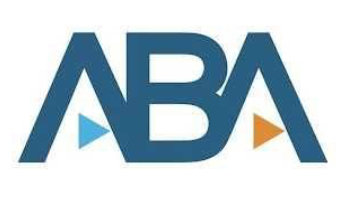 (class 9 i 45)
– The Appeals Department upheld the appeal.
– The Board of Appeal dismissed the appeal. It pointed out that the goods and services covered by the contested trademark are identical or, at least, similar to the goods and services covered by the earlier trademark. It pointed out that the marks in question were highly similar visually, identical phonetically and not comparable conceptually. In its view, there was a likelihood of confusion.
– The CJEU fully agreed with the Board of Appeal and dismissed the appeal.
Details of the case:
- T-263/24 – Noster Finance v EUIPO – Wewi Mobile (finect)
– The case concerned revocation proceedings.
– Wewi Mobile, SL filed an application for a declaration of expiry of the rights to the trademark  (classes 35, 36, 38, 42) registered in favour of Noster Finance SL.
– The Board of Appeal partially upheld the appeal insofar as it concerned the ‘financial analysis of an online platform connecting communities of investors with knowledge of the construction industry’, which fell within class 36.
– The CJEU dismissed the appeal. It emphasised, inter alia, that the provision of links to websites whose content has changed or could have changed since the examination carried out by the expert or the Board of Appeal does not constitute valid evidence. Therefore, such an annex cannot be taken into account when assessing evidence intended to prove genuine use.
Details of the case:
- T-215/24 – Rigo Trading v EUIPO (Représentation d’un rectangle ondulé)
– The case concerned proceedings for refusal of registration on the grounds of lack of distinctive character.
– Rigo Trading SA registered a figurative trademark  for goods in classes 9, 14, 16, 18, 20, 21, 24, 25, 26, 27 and 28.
– The EUIPO examiner rejected the application, and the Board of Appeal dismissed the appeal, stating that the sign applied for was not distinctive in relation to any of the goods indicated.
– The CJEU dismissed the appeal. It agreed with the Board of Appeal’s assessment that the trade mark applied for represents a wavy outline of a rectangular shape, the simplicity of which is comparable to that of a basic (rectangular) geometric figure, and that no element of that shape, including its rounded parts, is memorable or eye-catching and does not provide any indication of the characteristics of an animal or other creature.
Details of the case:
- T-106/23 – Iceland Foods v EUIPO – Icelandic Trademark (Iceland)
– The case concerned invalidity proceedings on the grounds of its descriptive character.
– Icelandic Trademark Holding ehf filed an application for invalidation of the word and figurative trademark:  (class 29, including meat and poultry; class 30, including coffee and tea; class 35, including supermarket services) registered in favour of Iceland Foods Ltd, supported by the International Trademark Association (INTA).
– Numerous grounds for invalidity of Article 59(1)(a) and Article 7(1)(b), (c) and (g) of Regulation 2017/1001 were raised (i.e. lack of distinctive character; the trademark consists exclusively of signs or indications which may serve to designate geographical origin in trade; the trademark, due to its nature, is likely to mislead the public, for example as to the nature, quality or geographical origin of the goods or services)
– The Cancellation Division upheld the request for cancellation.
– In the proceedings before the Board of Appeal, Icelandic Trademark Holding raised an additional ground for invalidity under Article 7(1)(f) of Regulation 2017/1001 (i.e. a trademark contrary to public policy or to accepted principles of morality).
– The Board of Appeal dismissed the appeal. It pointed out that the application for cancellation based on Article 7(1)(f) was inadmissible because it had been filed after the deadline at the appeal stage. The Board of Appeal found that the contested trademark is perceived by the relevant public, namely the general English-speaking public in the European Union, as an indication that the goods and services covered by it originate from Iceland. It added that this perception was not altered by the graphic elements of the contested trademark due to their decorative nature.
– The applicant brought an action before the CJEU, arguing that, despite the absence of EU-wide rules prohibiting the registration of country names as trademarks, the Board of Appeal had nevertheless imposed such a prohibition in the contested decision. It pointed out that the graphic elements of the distinctive typography, combined with the red and yellow background of the contested trade mark, precluded the mark from being considered descriptive.
– The CJEU dismissed the appeal. It recalled that, first, geographical names are excluded from registration as trade marks where they designate specific geographical locations which, in relation to a given category of goods or services, are already recognised or known for those goods or services and, as a result, are associated with them in the minds of the relevant public, and, second, geographical names which may be used by undertakings and must also remain available to them as indications of the geographical origin of the category of goods or services in question.
– The CJEU also pointed out that the Board of Appeal did not consider knowledge of Iceland to be a decisive criterion in the descriptive assessment. The contested decision stated thatthe assessment of the descriptive character of that trade mark must also take into account other relevant factors, such as the knowledge of the characteristics of the place designated by that geographical name and the link between the categories of goods and services and the contested trade mark.
– The CJEU also pointed out that, contrary to the applicant’s claims, the colour of the contested trade mark does not give it an unusual character. The word element is presented in a standard white font, without any particular typographical features. Although it is placed on a rectangular red, orange and yellow background, whose yellow-orange shading gives it a slightly faded appearance, the coloured background, in particular in orange and yellow, is generally common in advertising or on packaging, and consumers will therefore perceive it as a decorative element.
Details of the case:
- T-105/23 – Iceland Foods v EUIPO – Íslandsstofa (Promote Iceland) and others (ICELAND)
– The case concerned invalidity proceedings on the grounds of its descriptive character.
– Íslandsstofa (Promote Iceland), Iceland and SA – Business Iceland filed an application for invalidation of the word markICELAND(class: 7, 11, 16, 29–32 and 35) registered in favour of Iceland Foods Ltd., supported by the International Trademark Association (INTA).
– As in the case concerning the word and figurative mark described above (Case T-106/23), the Cancellation Division upheld the application for a declaration of invalidity on the grounds of the descriptive character of the mark, and the Board of Appeal dismissed the appeal.
– The CJEU dismissed the action. With regard to goods in Classes 7 and 11, it pointed out that some companies based in Iceland manufacture goods in Classes 7 and 11, such as refrigerators and freezers, bearing the contested trade mark. It can therefore reasonably be considered that the disputed mark could be perceived as an indication that goods in classes 7 and 11 originate in Iceland and that, in view of that country’s image as environmentally friendly, they have characteristics relating to sustainable development or ecological aspects.
Details of the case:

See more:
AI Legal landscape – how does the European Union regulate artificial intelligence?
AI Legal landscape – how does the European Union regulate artificial intelligence? The growing scale of artificial intelligence applications and the emergence of new legal and social challenges have led to the adoption by the EU of the first comprehensive regulations...
Overview of CJEU case law from 6.07 to 10.07.2026
Judgment – 09/07/2026 – Anne Frank Fonds, Case C‑788/24 – The case concerned a request for a preliminary ruling regarding the interpretation of the concept of “communication to the public” under Article 3(1) of Directive 2001/29, as well as the assessment of the...
Overview of CJEU case law from 29.06 to 03.07.2026
Attilah v EUIPO – Bella Tawziaa II and Groupe Bellakhdar, Case T‑654/24 – The case concerned invalidity proceedings against an EU trade mark on the ground that the application had been filed in bad faith within the meaning of Article 52(1)(b) of Regulation No...