

Overview of CJEU case law from 21.07 to 27.07.2025
Below we present an overview of CJEU case law concerning intellectual property for the period from 21st to 27th July 2025.
- T-472/24 – Summer Fridays v EUIPO (JET LAG)
- The case concerned proceedings for refusal of registration of a trademark (descriptive character).
- Summer Fridays LLC filed a word mark for JET LAG (class 3, including cosmetics; skin care products, namely face creams, face gels for cosmetic purposes, face and body scrubs).
- The EUIPO expert rejected the application. The Board of Appeal dismissed the appeal, arguing that the term ‘jet lag’ is descriptive of one of the characteristics of the goods in question, as a significant portion of the relevant public perceives it as indicating that the products are intended to refresh, rejuvenate and regenerate the skin, alleviating the visible physical effects of jet lag, which include fatigue, dehydration and dull complexion.
- The court dismissed the complaint. It pointed out that the goods in question are specifically intended to improve the appearance and health of the skin. It agreed with the Board of Appeal that the term “jet lag” refers to the general feeling of tiredness and disorientation often experienced by air travellers crossing several time zones in a relatively short period of time. Jet lag can manifest itself in physical symptoms such as, among other things, drowsiness, more pronounced fine wrinkles, sensitive skin and even acne, whereas the goods in question are intended to improve the appearance and health of the skin.
Case details:
- T-436/24 – Löwen Entertainment v EUIPO – Wazdan Holding (Magic Crown)
- The case concerned opposition proceedings on the grounds of likelihood of confusion.
- Wazdan Holding LTD registered the trademark Magic Crown (class 9, including coin mechanisms; computer game software; class 28, including game tokens; table games; amusement machines; class 41, casino, gaming and gambling services).
- Löwen Entertainment GmbH filed an opposition based on the earlier word mark Crown (class 9, including sound recording and reproduction devices and parts thereof; class 28, including coin- and token-operated gaming machines; class 41 'Entertainment, namely entertainment, amusement and relaxation services; amusement arcades with gaming machines).
- The Opposition Division upheld the opposition.
- The Board of Appeal upheld the appeal, arguing that there was no likelihood of confusion. In particular, given the weak distinctive character of the earlier trademark and the low degree of visual, phonetic and conceptual similarity between the conflicting signs, resulting from the weak distinctive character of the common element “Crown”.
- The court dismissed the complaint. In the Court’s opinion, given the low degree of visual, phonetic and conceptual similarity between the conflicting signs and the weak distinctive character of the earlier sign, the Board of Appeal did not err in its assessment that there was no likelihood of confusion, despite the identical or similar nature of the conflicting goods and services.
Case details:
- T-432/24 – Glaxo Group v EUIPO – Cipla Euope (Forme d’un inhalateur)
- The case concerned invalidity proceedings against a three-dimensional trade mark in the shape of an inhaler.
- Cipla Europe NV filed an application for invalidity of the three-dimensional mark registered by Glaxo Group Ltd:
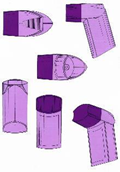 (Class 5: ‘Pharmaceutical preparations and substances for the prevention, treatment and/or alleviation of respiratory diseases’; Class 10: ‘Inhalers, parts and components for all the aforementioned goods’).
 - The Invalidity Division upheld the application for invalidity on the grounds of lack of distinctive character.
- The Board of Appeal dismissed the appeal. It found that the contested trade mark, assessed as a whole, did not differ significantly from the norms and customs prevailing in the sector of inhalers used for the treatment of respiratory diseases during the period in question and, on that basis, concluded that the mark was devoid of distinctive character. After examining the evidence submitted by the applicant, it also found that the applicant had not demonstrated that the contested trademark had acquired distinctive character through use.
- The court agreed with the Board of Appeal and dismissed the action.
Case details:
- T-393/24 – Robertet v EUIPO – RB Distribution (HOMM THE SOUND OF NATURE)
- The case concerned opposition proceedings on the grounds of likelihood of confusion.
- RB Distribution Srl registered a word and figurative trademark:
 (class 3, 4 and 35)
 - Robertet, Inc. filed an opposition based on the earlier EU trade mark HOME OF NATURE (classes 1 and 3).
- The Opposition Division upheld the opposition. The Board of Appeal upheld the appeal and dismissed the opposition in its entirety, citing the lack of likelihood of confusion in relation to all goods and services covered by the registered trademark.
- The court upheld the complaint. It pointed out that the conflicting trademarks show a low degree of visual similarity, average phonetic similarity and a low degree of conceptual similarity. The Board of Appeal erred in its assessment when it found that the element in the upper part of the trademark applied for would “certainly” would not be pronounced as “hōm” – as in the English word “home” – or “hom”, and that the relevant public would spell out the individual letters of that element, pronouncing the letter “m” twice or pronouncing a “double m”.
Case details:
- T-67/24Impossible Foods v EUIPO – Impossible Foods (IMPOSSIBLE BAKERS)
- The case concerned opposition proceedings on the grounds of likelihood of confusion.
- Impossible Foods SL filed a word and graphic trademark:
 (Class 30: ‘Bakery products; Pastries; Confectionery; Edible ice cream; Sweets; Cakes’; Class 35: ‘Wholesale and retail sale in stores and via global computer networks of the following goods: Bakery products, Pastry products, Dry cakes, Ice cream, Chocolates, Confectionery, Cakes’).
 - Impossible Foods Inc. wniosła sprzeciw wobec ww. zgłoszenia oparty na wcześniejszym słownym znaku towarowym IMPOSSIBLE (klasa 30 m.in. Proszek do pieczenia; chleb; przekąski na bazie chleba; przekąski na bazie zbóż).
- The Opposition Division upheld the opposition. The Board of Appeal upheld the appeal, citing the lack of likelihood of confusion.
- The court dismissed the appeal. It agreed with the Board of Appeal, which noted that the word ‘impossible’ has a somewhat laudatory character and is of below-average distinctiveness. Meanwhile, a flying elephant has average distinctive character, given its rather striking representation in the upper part of the mark and the fact that this element does not describe the goods in question. However, the graphic element was not considered dominant.
Details of the case:
- T-54/24 – EveMotion v EUIPO – WMK Trading (Pavillon)
- The case concerned invalidity proceedings against a design on the grounds of lack of individual character.
- WMK Trading GmbH filed an application for invalidity of a design representing ‘pavilions; tents’ registered by EveMotion GmbH:
- The application for a declaration of invalidity was based, inter alia, on an earlier EU design disclosed no later than on 7 March 2016:
- The Cancellation Division declared the contested design invalid.
- The Board of Appeal dismissed the appeal, arguing that the contested design did not have individual character.
- The Court dismissed the action. The degree of freedom enjoyed by the designer was considered high. There was also no exhaustion of the state of the technique.
Details of the case:
- T-563/23 – Pernod Ricard v EUIPO – West End Drinks (The King of Soho)
- The case concerned opposition proceedings on the grounds of likelihood of confusion.
- West End Drinks Ltd registered a word and figurative trademark:
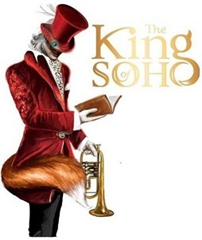 (class 33 – gin, vodka).
 - Pernod Ricard filed an opposition based on an earlier word mark SOHO (class 33 – alcoholic beverages (except beer), namely liqueurs and prepared wine cocktails).
- The Opposition Division upheld the opposition.
- The Board of Appeal upheld the appeal and dismissed the opposition in its entirety. It then issued a decision correcting its own decision.
- By judgment of 20 November 2024, Pernod Ricard v EUIPO – West End Drinks (The King of Soho) (T‑13/24, unpublished, EU:T:2024:846), the Court declared the above decision of the Board of Appeal partially invalid.
- By an order of 27 November 2024, the Court invited the applicant and EUIPO to submit their observations on the consequences to be drawn from the judgment of 20 November 2024, The King of Soho (T‑13/24, not published, EU:T:2024:846).
- In the present judgment, the Court has held that the Board of Appeal’s assessment of the level of attention of the relevant public is contradictory and incomprehensible. The Board of Appeal found that the average consumer of alcohol would pay attention to the class and type of beverage, its characteristics, origin, method of production, trade mark and price, as well as details due to the huge variety of competing products, and that he would choose a drink from one group or the other carefully, taking into account the potentially significant impact of alcohol consumption on the human body. The Board of Appeal again stated that the relevant public had an average level of attention. However, at the end of its decision, it pointed out that the level of attention varied from average to high. Consequently, the Court of Justice annulled the decision of the Board of Appeal.
Details of the case:

See more:
From the Turing Test to the 2024 Nobel Prize: How Artificial Intelligence Has Developed Over the Decades
From the Turing Test to the 2024 Nobel Prize: How Artificial Intelligence Has Developed Over the Decades This is the first article in a series of publications devoted to artificial intelligence. As a starting point, it is worth setting out the key stages in the...
Overview of CJEU case law from 2.03 to 13.03.2026
Kowalski v EUIPO – Hoyer (FLAMBIT – flambriks), Case T‑301/25– The case concerned opposition proceedings against the registration of an EU trade mark. – Mr Dariusz Kowalski filed an application for the registration of the following EU figurative sign FLAMBIT for goods...
Overview of CJEU case law from 16.02 to 27.02.2026
Opinion of Advocate General – 26 February 2026 – Verwertungsgesellschaft Wort (VG Wort) v TL, Case C‑840/24 – The request for a preliminary ruling was submitted by the Bundesgerichtshof (Federal Court of Justice, Germany) and concerns the interpretation of provisions...