

Overview of CJEU case law from 17.11 to 23.11.2025
Review of CJEU case law from 17/11/2025 to 23/11/2025
- Zündapp v EUIPO – Longines (Représentation d’un bouclier stylisé avec des barres horizontales), Case T-3/25
– The case concerned proceedings concerning an opposition to the registration of a trademark due to the risk of causing confusion and damage to reputation.
– Zündapp Verwaltungsgesellschaft mbH filed the figurative mark  for goods in class 14 (including watches, electronic watches).
– Compagnie des Montres Longines filed an opposition against the registration of the above-mentioned mark based on the earlier figurative trademark:  registered for goods in class 14 (including jewellery, watches).
– The EUIPO Opposition Division upheld the opposition, indicating that there was a likelihood of confusion among the public. It did not examine the relative bar to registration relating to infringement of the reputation of the mark.
– The Appeals Chamber upheld the appeal. In its view, there was some visual and conceptual similarity, but there was no likelihood of misleading the public. It argued that the Opposition Division had wrongly failed to examine the enhanced distinctive character of the earlier mark as a result of its use. It therefore remitted the case to the Opposition Division for examination, first, of the alleged enhanced distinctiveness and, where appropriate, of the existence of a likelihood of confusion, taking into account such enhanced distinctiveness, and, second, of the ground for refusal relating to damage to reputation.
– The EU Court dismissed the complaint. According to the court, the Board of Appeal was right to find a certain visual and conceptual similarity between the signs. It could not therefore exclude the likelihood of confusion without examining the increased distinctive character or the damage to reputation.
Case details:
- +pharma arzneimittel v EUIPO – PlusQuam Pharma (PlusQuam +PHARMA) Case T-645/24
– The case concerned opposition proceedings based on the existence of a likelihood of confusion and damage to reputation.
– PlusQuam Pharma, SL has filed a word-figurative trademark:  for goods in classes 3 (cosmetic products) and 5 (including pharmaceutical products) of the Nice Classification.
– +pharma arzneimittel GmbH filed an opposition against the registration of the above-mentioned trademark, based on the earlier Austrian word trademark: +PHARMA for goods in class 5 of the Nice Classification (including pharmaceutical products).
– at the request of the applicant, +pharma arzneimittel GmbH was requested to provide evidence of use of the earlier trademark.
– The Opposition Division dismissed the opposition in its entirety, indicating that there was no likelihood of confusion and no grounds for finding an infringement of reputation.
– The Board of Appeal dismissed the appeal in its entirety. The Board took into account, in particular, the weak distinctive character of the earlier trademark, while finding that no increased distinctive character through use had been demonstrated.
– The court upheld the complaint and annulled the decision of the Appeals Chamber. It pointed out that the Board of Appeal had wrongly rejected a significant part of the evidence of the enhanced distinctive character of the earlier mark.
Case details:
- Heinrich Sieber & Co. v EUIPO – Achilles (Fourre-tout), Case T-641/24
– The case concerned proceedings for the invalidation of an EU industrial design.
– Dieter Achilles is entitled to an industrial design representing a shopping bag:
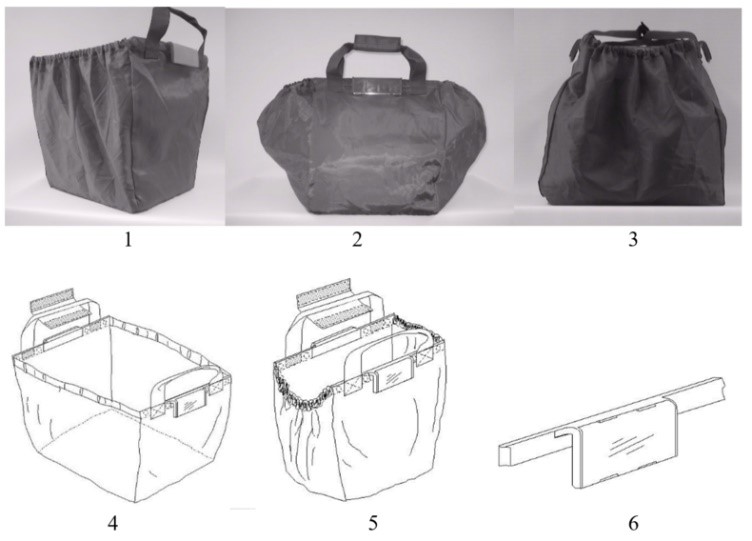
– Heinrich Sieber & Co. GmbH & Co. KG filed an application to invalidate the above-mentioned design due to its lack of uniformity.
– The Cancellation Division dismissed the application.
– The Board of Appeal dismissed the appeal, pointing out that the design represents the appearance of a single product. It found that the discrepancies raised by the applicant resulted solely from differences between the photographic and graphic representation of the contested design. It could not be assumed that the contested design actually protected two products, namely a shopping bag and a belt with a clip attached to it.
– The court dismissed the complaint and agreed with the assessment of the Board of Appeal that the design represents the appearance of a single product.
Case details:
- Gürok v EUIPO – Olav (Lav), Case T-564/24
– The case concerned proceedings to determine the revocation of rights to a trademark due to the lack of its actual use.
– Gürok Turizm ve Madencilik AŞ is entitled to the word-figurative trademark:  registered for goods and services in classes 8, 11, 19, 21, 35, 37, 39, 41 and 43 of the Nice Classification.
– Olac GmbH filed an application to declare the rights to the above-mentioned mark to be revoked due to lack of genuine use.
– The Cancellation Board partially allowed the application and declared the contested trademark invalid for all goods except „containers for household or kitchen use; glassware not included in other classes; plates, jars, cookie jars, glasses, mugs, coffee cups, carafes, tableware (other than knives, forks and spoons) made of glass, namely bowls, mugs, plates, jugs” in Class 21.
– The Board of Appeal upheld the appeal , finding in essence that the evidence submitted by the appellant did not meet the required standard of probative value to demonstrate the scope of use of the contested mark and that the lack of additional explanations and references from the appellant prevented the evidence from being considered reliable, objective and sufficient.
– The court upheld the complaint and repealed the decision. In its opinion, the Board of Appeal had made a number of contradictions in the reasoning of the contested decision and imposed excessive requirements on the applicant as to the quality of evidence. According to the Court, the Board of Appeal was wrong to require the applicant to demonstrate a clear link between the individual invoice codes and the goods covered by them, further indicating that the link should have been further explained.
Case details:
- Amphora Wineries v EUIPO – Bernabei Liquori (CHAMPAGNE LOUIS LAMAR LAMAR REIMS – FRANCE), Case T-556/24
– The case concerned proceedings to determine the revocation of rights to a trademark due to the lack of its actual use.
– Bernabei Liquori Srl is entitled to the word-figurative trademark: 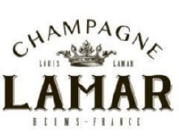 registered for goods in class 33 – alcoholic beverages (except beers), namely wines complying with the characteristics of „Champagne”.
– Amphora Wineries AG filed an application to declare the rights to the above-mentioned mark revoked due to lack of genuine use.
– The Cancellation Division declared the above-mentioned trademark to be revoked.
– The Board of Appeal annulled the above-mentioned decision and dismissed the application for annulment. It took into account the second set of evidence submitted by the intervener’s legal predecessor, finding that this evidence was relevant and sufficient to establish that the mark had been put to genuine use.
– The EU Court dismissed the complaint. It found the applicant’s arguments that the contested trademark was used mainly by a distributor of goods bearing the mark to be unfounded. The court recalled that the use of a trademark with the consent of the owner is deemed to have been made by the owner.
Case details:
- Aboca v EUIPO – Azienda Agroalimentare Grignano (ABOCA), Case T-543/24
– The case concerned the proceedings in case concerning the revocation of rights to a trademark due to the lack of its genuine use.
– Azienda Agroalimentare Grignano Srl is entitled to the word trademark: ABOCA registered for goods in class 30 (including coffee, cocoa, confectionery) and goods in class 33 (including wines, liqueurs) of the Nice Classification.
– Aboca SpA Soc. agr. It filed an application to declare the above-mentioned trademark null and void.
– The Cancellation Division invalidated the contested mark for all products, except for „wines” designated in class 33 of the Nice Classification.
– The Appeals Chamber dismissed the appeal. It noted that in some evidence the contested mark was presented in word form, while in others it was presented in the following forms:  and
and  . It found that the graphic arrangements in which the contested trademark appeared did not alter its distinctive character and found that the contested trademark was actually used for “wines” in Class 33.
– The court dismissed the complaint, sharing the assessment of the Board of Appeal that the evidence was sufficient to conclude that the disputed mark was actually used for „wines”.
Case details:
- Vassilev & Chisuse v EUIPO – Vayanos Kostopoulos (VC LAW), Case T-524/24
– The case concerned opposition proceedings against a trademark application based on the likelihood of confusion and damage to reputation.
– Vassilev & Chisuse filed a word-figurative trademark:  for goods and services in classes 16 (including paper signs, catalogues, newspapers), 35 (including business management assistance services), 45 (including trade mark consultancy) of the Nice Classification.
– Vayanos Kostopoulos filed an opposition against the registration of the above-mentioned trademark. The opposition was based on the word mark: vk law, registered for goods and services in classes 16, 35 and 45.
– The Opposition Division upheld the opposition due to the likelihood of misleading the public.
– The Appeals Chamber dismissed the appeal.
– The court upheld the complaint and annulled the decision of the Appeals Chamber. According to the Court, the Board of Appeal erred in finding that the element “law” was not descriptive for professional consumers, thereby overestimating the degree of visual and phonetic similarity. He pointed out that the degree of visual similarity between the marks is low. The Court assessed the phonetic similarity, due to the difference between the second letters, as average.
– The Court consequently indicated that the difference in the corresponding second letters of the conflicting trademarks and in the figurative element of the trademark applied for is of significant importance and the similarities are not sufficient to outweigh the differences. In relation to goods and services having a sufficiently direct and specific link with a field of law, the Board of Appeal erred in finding that there was a likelihood of confusion.
Case details:

See more:
Review of CJEU case law from 2.02.2026 to 6.02.2026
Judgment of 5 February 2026, EUIPO v Nowhere Co. Ltd, Case C‑337/22 P – The case concerned opposition proceedings relating to the application for registration of the EU figurative trade mark APE TEES: – On 30 June 2015, Mr Ye filed an application for an EU trade...
Review of CJEU case law from 26.01.2026 to 30.01.2026
Judgment – of 28 January 2026 – Montepelayo, SLU v. EUIPO, Case T-203/25– The case concerned opposition proceedings against the registration of an EU word mark. – Montepelayo, SLU filed an EU word mark application for TELOTRÓN for goods and services in Classes 5...
Review of CJEU case law from 19.01.2026 to 23.01.2026
Hesse v EUIPO – 19.01.2026 – Ferrari (TESTAROSSA), Case C‑597/25 P– The case concerned the procedure under Article 58a of the Statute of the Court of Justice for determining whether an appeal against a judgment of the General Court in EU trade mark proceedings should...