

Review of CJEU case law from 26.01.2026 to 30.01.2026
Judgment – of 28 January 2026 – Montepelayo, SLU v. EUIPO, Case T-203/25
– The case concerned opposition proceedings against the registration of an EU word mark.
– Montepelayo, SLU filed an EU word mark application for TELOTRÓN for goods and services in Classes 5 (medical and pharmaceutical preparations), 9 (software), and 44 (medical and advisory healthcare services).
– TRON – Translationale Onkologie an der Universitätsmedizin der Johannes Gutenberg-Universität Mainz gGmbH filed an opposition based on the earlier EU word mark TRON and the earlier German word mark TRON, registered respectively for scientific, technological, and medical services in Classes 42 and 44, and for Class 9 software relating to medical and biotechnological applications.
– The opposition was based on Article 8(1)(b) of Regulation 2017/1001 (likelihood of confusion).
– The Opposition Division rejected the opposition in its entirety.
– The First Board of Appeal upheld the appeal. It found, in relation to the earlier EU mark, that the relevant public consisted of English-speaking consumers in the European Union, including both the specialist public in the medical and biotechnological fields (with a high level of attention for Classes 5 and 44, and average attention for Class 9 software) and the general public. It held that the goods in Class 5 were similar to an average degree to the services in Classes 42 and 44, that the services in Class 44 were identical, and that the goods in Class 9 were not similar. It considered that the mark applied for would be perceived as comprising the elements “telo” and “trón”, that both elements were distinctive, and that “trón” coincided with the earlier marks. It concluded that the signs were visually and phonetically similar to an average degree and conceptually similar, leading to a likelihood of confusion for the goods in Class 5 and the services in Class 44.
– As regards the earlier German mark, the Board of Appeal found that the relevant public consisted of specialists in the medical field in Germany with an average level of attention. It held that the goods in Class 9 covered by each mark were identical and that the same comparison of signs applied, leading to a likelihood of confusion.
– The General Court dismissed the action. It confirmed, first, the Board of Appeal’s identification of the relevant publics and levels of attention. It agreed that the specialist public was decisive and that the assessment did not require separate analysis of the general public.
– The Court endorsed the Board of Appeal’s findings on similarity of goods and services. It found the applicant’s criticisms insufficiently substantiated to call those findings into question.
– The Court upheld the finding that the mark applied for would be broken down by the relevant public into “telo” and “trón”, both of which are familiar scientific terms or prefixes in English and German in the medical/biotechnological context. It agreed that none of the elements was dominant and that both had average distinctiveness.
– As regards similarity of the signs, the Court held that the element “trón” fully incorporates the earlier mark TRON, that the acute accent on the “ó” does not materially affect perception, and that the signs are visually and phonetically similar to an average degree. It agreed that neither the presence of “telo” nor the difference in length of the signs eliminated similarity.
– Conceptually, the Court accepted that at least the specialist public would attribute meaning to the element “tron”, and would therefore perceive a conceptual similarity.
– The Court held that, taking into account the similarity of the signs, the identity or similarity of the goods and services, the average distinctiveness of the earlier marks, and the principle of interdependence, the Board of Appeal had correctly found a likelihood of confusion. It confirmed this conclusion both for the earlier EU mark (Classes 5 and 44) and for the earlier German mark (Class 9).
– The Court rejected the applicant’s argument that coexistence of other “tron” marks disproved confusion, noting that the applicant had not demonstrated market coexistence based on absence of confusion, and that the marks cited were not identical.
Case details: eur-lex.europa.eu/legal-content/EN/TXT/HTML/?uri=CELEX:62025TJ0203
Judgment – 28.01.2026 — Ella Hotels and Resorts monoprosopi AE v. EUIPO, Case T-245/25
– The case concerned opposition proceedings under Article 8(5) of Regulation 2017/1001 against the registration of the EU word mark ELLA HOTELS AND RESORTS.
– Ella Hotels and Resorts monoprosopi AE filed the mark ELLA HOTELS AND RESORTS for services in Class 35 (advertising; business assistance, management and administrative services), Class 43 (food and drink; temporary accommodation; reservations and related advisory services) and Class 44 (human hygiene and beauty care; human healthcare services).
– Hachette Filipacchi Presse filed an opposition based on the earlier EU figurative mark:
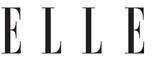
, registered among others for goods in Class 16 (fashion magazines and periodicals concerning fashion, beauty, woven goods, gastronomy, culture, lifestyle, wellness, and the socio‑professional integration and protection of women), invoking Article 8(5) (reputation; unfair advantage; detriment; lack of due cause).
– The Opposition Division partially upheld the opposition. It rejected the application in respect of all Class 43 services and the Class 35 services “advertising, marketing and promotional services”, and upheld registration only for “business assistance, management and administrative services” in Class 35.
– The First Board of Appeal partially annulled the decision. It rejected the opposition for (i) advertising, marketing and promotional services (Class 35) and (ii) all Class 43 services. It upheld the opposition for Class 44 services (human hygiene and beauty care; human healthcare services), finding that the Article 8(5) requirements were met for those services.
– The General Court dismissed the action in its entirety. It held that, for Class 44 services, all cumulative conditions under Article 8(5) were satisfied: the earlier EU mark was registered; the signs had at least an average visual and phonetic similarity; the earlier mark enjoyed reputation (established in particular in Germany for women’s fashion magazines); the relevant public would establish a link between the marks; and use of the later mark would take unfair advantage of the earlier mark’s repute. The applicant had not shown due cause.
– As regards the relevant public, the Court confirmed that for unfair advantage the relevant public consists of average consumers of the services of the contested mark. Human hygiene and beauty care services target the general public with above‑average attention, while human healthcare services also target professionals with high attention. For the assessment of detriment to repute or distinctive character, the relevant public consists of consumers of fashion magazines, with an average level of attention. The argument that the analysis should be limited to the female readership of the magazine was rejected, as Article 8(5) requires considering all consumers likely to establish a link, not solely those using both goods and services.
– Concerning the reputation of the earlier mark, the Court upheld the finding that the ELLE mark enjoys reputation in Germany for women’s fashion magazines, based on long‑standing distribution, significant circulation and promotional investment. It held that the word “ELLE” had average inherent distinctiveness in relation to fashion magazines, and that arguments concerning its comprehension as a French pronoun or references to “cubit” or “ulna” were insufficient to undermine that finding.
– As regards similarity, the Court confirmed the Board of Appeal’s conclusion of at least average visual and phonetic similarity. Conceptually, the earlier mark did not convey a clear concept for a significant part of the public. Although “Ella” may be perceived as a female given name, this did not amount to a sufficiently pronounced conceptual difference capable of neutralising the visual and phonetic similarities.
– As to proximity for the purposes of Article 8(5), the Court reiterated that similarity of goods/services is not required; a simple “connection” is sufficient. It confirmed that such a connection exists between women’s fashion magazines (Class 16) and Class 44 services (human hygiene, beauty care, healthcare) because all relate to aesthetics, physical appearance and well‑being, and they share overlapping target audiences. Arguments that hygiene services target only professionals, or that medical services have no connection with fashion magazines, were rejected.
– As regards the existence of unfair advantage, the Court held that, given the reputation of the earlier mark, the similarity of the signs, the existence of a link and the proximity between the goods and services, the Board of Appeal was correct to find a real risk that the image of beauty, elegance and style associated with the ELLE mark would be transferred to the services offered under the later mark. The proprietor of the earlier mark was not required to prove actual injury; it was sufficient to demonstrate a non‑hypothetical future risk based on logical deductions from market realities.
– As for due cause, the Court confirmed that the applicant had not shown any. The advertisements submitted either post‑dated the relevant period or concerned hotels named “Elissa” or “Helea”, not “Ella”. The appearance of “ellaresorts.com” was insufficient to show real and effective use of “Ella” as a trade mark prior to the date on which the earlier mark’s reputation was established. Arguments that “Ella” is a common female name or has cultural connotations in Greek were unsubstantiated and could not override the protection afforded to the reputed ELLE mark.
– The action was dismissed in its entirety.
Case details: eur-lex.europa.eu/legal-content/EN/TXT/HTML/?uri=CELEX:62025TJ0245
Judgment – 28 January 2026 – Ella Hotels and Resorts monoprosopi AE v EUIPO, Case T-246/25.
– The case concerned opposition proceedings under Article 8(5) of Regulation 2017/1001 against the registration of a figurative EU trade mark.
– Ella Hotels and Resorts monoprosopi AE filed an application for the following EU figurative mark:

covering services in Class 35 (advertising; business assistance, management and administrative services), Class 43 (services for providing food and drink; temporary accommodation; related reservation and advisory services), and Class 44 (human hygiene and beauty care; human healthcare services).
– Hachette Filipacchi Presse filed an opposition based on the earlier EU figurative mark:
registered inter alia for goods in Class 16 (fashion magazines and periodicals relating to fashion, beauty, decorating, gastronomy, culture, lifestyle, wellness, and topics relating to the socio‑professional integration and protection of women), invoking Article 8(5) (reputation; unfair advantage; detriment; lack of due cause).
– The Opposition Division partially upheld the opposition, rejecting the mark for all services in Classes 43 and 44 and for “advertising, marketing and promotional services” in Class 35, while allowing registration only for “business assistance, management and administrative services” in Class 35.
– The First Board of Appeal partially annulled the Opposition Division’s decision. It rejected the opposition for advertising, marketing and promotional services in Class 35 and for all services in Class 43. It confirmed, however, the opposition for the Class 44 services (human hygiene and beauty care; human healthcare services), finding that the conditions of Article 8(5) were satisfied for those services.
– The General Court dismissed the action. It confirmed that all cumulative elements required under Article 8(5) were present as regards Class 44 services: the earlier mark was registered; the signs displayed at least an average degree of visual and phonetic similarity; the earlier mark enjoyed reputation within the European Union (in particular in Germany) for women’s fashion magazines; the relevant public would establish a link between the signs; and use of the mark applied for would take unfair advantage of the earlier mark’s repute. The applicant had not proven due cause.
– Concerning the relevant public, the Court upheld the Board of Appeal’s findings. For unfair advantage, the relevant public consists of average consumers of the services of the contested mark. Human hygiene and beauty care services target the general public with above‑average attention; human healthcare services also target professionals with high attention. For detriment to reputation/distinctiveness, the relevant public consists of consumers of fashion magazines with average attention. The argument that the assessment should focus only on the female readership of Elle magazine was rejected, since the relevant test is whether the public confronted with the later mark can call the earlier mark to mind.
– The Court confirmed the finding that the earlier ELLE mark has reputation in Germany for women’s fashion magazines, based on long-standing distribution, promotional investment, and strong circulation. The fact that a small percentage of the overall German population reads the magazine did not undermine the existence of reputation within the relevant public. The earlier mark was also found to possess average inherent distinctiveness.
– Regarding similarity, the Court upheld that the signs share at least an average degree of visual and phonetic similarity. Conceptually, “ELLE” does not convey an immediate, specific meaning for a significant portion of the public; although “ELLA” may be perceived as a female given name, this was not enough to create a sufficiently pronounced conceptual difference capable of neutralising the other similarities.
– As regards proximity, the Court confirmed the Board of Appeal’s assessment that a link exists between the earlier mark’s Class 16 fashion magazines and the Class 44 services of the contested mark. Both appealed to overlapping target audiences and related to aesthetics, personal appearance and well-being. The Court rejected the argument that hygiene and healthcare services concern wholly distinct professional spheres, observing that fashion magazines regularly address topics such as skincare, beauty, body care and cosmetic procedures.
– The Court agreed that there was a real, non‑hypothetical risk that the applicant could take unfair advantage of the repute of the earlier mark. The image of beauty, elegance and style associated with the earlier ELLE mark could be transferred to the applicant’s Class 44 services, thereby facilitating their marketing. The proprietor of the earlier mark was not required to show actual injury; it sufficed to demonstrate a plausible future risk based on logical deductions from sector practices.
– The Court held that the applicant had not established due cause. The advertising materials submitted either post‑dated the relevant period or concerned hotels named “Elissa” or “Helea,” not “Ella.” The presence of “ellaresort.com” in a small-font domain reference did not evidence real, effective use of “Ella” as a trade mark before the earlier mark’s reputation was established. Arguments concerning the common nature of the name “Ella” or its alleged cultural connotations were unsupported and insufficient.
– The action was dismissed.
Case details: eur-lex.europa.eu/legal-content/EN/TXT/HTML/?uri=CELEX:62025TJ0246
eur-lex.europa.eu/legal-content/EN/TXT/HTML/?uri=CELEX:62025TJ0131
Judgment – 28 January 2026 – ABB Asea Brown Boveri Ltd v EUIPO, Case T-131/25
– The case concerned an action seeking annulment of a decision rejecting registration of the EU word mark EcoGuard based on absolute grounds for refusal, in particular descriptive character under Article 7(1)(c) of Regulation 2017/1001.
– ABB Asea Brown Boveri Ltd filed an EU trade mark application for the word mark EcoGuard, covering (after restriction) goods in Class 6 (metal cable straps, metal pipes and fittings for protecting electric cables), Class 9 (electric installation materials, including cables, conduits, connections, sockets) and Class 17 (non‑metal seals, fittings and connectors for pipes and conduits protecting electric cables).
– The examiner rejected the application under Article 7(1)(b) and (c), in conjunction with Article 7(2). ABB appealed.
– The Fourth Board of Appeal dismissed the appeal. It found that the relevant public, consisting of English‑speaking professionals and general consumers in the EU, would understand the sign EcoGuard as designating environmentally friendly goods that provide protection or act as safeguards, or as indicating that the goods protect the environment. It concluded that the sign was descriptive and therefore also devoid of distinctive character. It rejected arguments based on earlier registrations.
– The General Court dismissed the action. It upheld the relevant public identified by the Board of Appeal and confirmed that the sign consisted of the elements “eco” and “guard”, both readily understood by English‑speaking consumers.
– As regards the term “eco”, the Court noted that it has a settled meaning in EU case‑law referring to “ecological”, commonly used in trade to indicate environmentally friendly characteristics. The applicant had not shown otherwise.
– As regards “guard”, the Court held that it would be understood as referring either to something that protects or to the act of protecting. It rejected the applicant’s argument that “guard” must be interpreted narrowly as referring only to persons or devices performing an active protective role. Since at least one possible meaning of the word designates a characteristic of the goods, that meaning suffices to trigger Article 7(1)(c).
– The Court confirmed that the sign EcoGuard, taken as a whole, would be immediately perceived as describing goods that are environmentally friendly and provide protection. The combination of “eco” and “guard” did not produce an impression sufficiently far‑removed from the sum of its parts, and therefore the mark was descriptive as a neologism constructed from descriptive components.
– The Court found that the Board of Appeal had correctly concluded that there was a sufficiently direct and specific relationship between the sign and the goods: the goods at issue (pipes, conduits, connectors, cable protection material) can indeed have environmentally friendly or protective characteristics, and consumers would perceive EcoGuard as descriptive of such properties.
– The Court rejected the applicant’s argument that the sign was abstract or ambiguous. It also held that the use of EcoGuard in English‑speaking markets (such as the United States) was irrelevant under the autonomous EU trade mark system, and that market use for origin‑identification does not affect the descriptive character assessment.
– Since the finding of descriptiveness under Article 7(1)(c) sufficed to refuse registration, the Court held that it was unnecessary to examine the plea concerning lack of distinctive character under Article 7(1)(b).
– The plea alleging breach of equal treatment and sound administration was rejected. The Court recalled that EUIPO decisions must be assessed solely under Regulation 2017/1001, and an applicant cannot rely on previous registrations (even if identical) to secure a similar outcome. The cited earlier registrations were either removed from the register, concerned figurative signs, or involved pending applications decided under different factual circumstances. None could bind the Board of Appeal.
– The action was dismissed in its entirety.
Case details: eur-lex.europa.eu/legal-content/EN/TXT/HTML/?uri=CELEX:62025TJ0131

See more:
From the Turing Test to the 2024 Nobel Prize: How Artificial Intelligence Has Developed Over the Decades
From the Turing Test to the 2024 Nobel Prize: How Artificial Intelligence Has Developed Over the Decades This is the first article in a series of publications devoted to artificial intelligence. As a starting point, it is worth setting out the key stages in the...
Overview of CJEU case law from 2.03 to 13.03.2026
Kowalski v EUIPO – Hoyer (FLAMBIT – flambriks), Case T‑301/25– The case concerned opposition proceedings against the registration of an EU trade mark. – Mr Dariusz Kowalski filed an application for the registration of the following EU figurative sign FLAMBIT for goods...
Overview of CJEU case law from 16.02 to 27.02.2026
Opinion of Advocate General – 26 February 2026 – Verwertungsgesellschaft Wort (VG Wort) v TL, Case C‑840/24 – The request for a preliminary ruling was submitted by the Bundesgerichtshof (Federal Court of Justice, Germany) and concerns the interpretation of provisions...