

Copyright limits for industrial design – CJEU judgment (C-580/23 and C-795/23)
Copyright limits for industrial design – CJEU judgment (C-580/23 and C-795/23)
Can a dining table or chest of drawers constitute a work protected by copyright? First of all, the work must be original in nature, understood as the author’s own intellectual creation. Secondly, only those elements that constitute an expression of that creation are protected, not the ideas or solutions themselves.
The CJEU judgment of 4 December 2025 in joined cases C-580/23 and C-795/23 clarifies the practice regarding copyright protection of applied art objects, refers to the interpretation of the premise of originality and to the possibility of cumulating claims arising from the protection of industrial designs and copyright.
Facts of the case
The parties to the dispute were Mio (a furniture retailer) and Asplund (a furniture designer and manufacturer). Asplund claimed that the tables in its ‘Palais Royal’ collection were works within the meaning of copyright law and therefore brought an action against Mio to prohibit the manufacture and sale of the ‘Cord’ series of tables, which allegedly infringed Asplund’s copyright. Mio argued that Asplund’s designs did not meet the requirement of originality because they were based on well-known and common forms. It also pointed out that the differences between the designs were sufficient to rule out infringement. The court of first instance ruled in favour of Asplund. The case was referred to the appeal court, which had doubts as to how specifically to examine the ‘originality’ of a design as a work under EU law. Consequently, the Swedish court referred questions to the CJEU for a preliminary ruling on: (i) how to determine whether an industrial design/applied art is a work and how to establish the premise of originality; (ii) how to examine infringement, i.e. what kind of similarity is relevant and whether, among other things, the degree of originality of the work and the fact that both designs use commonly available forms are relevant. A similar dispute was also heard before a German court, which asked similar questions for a preliminary ruling. However, the dispute concerned a chest of drawers.
Case C-580/23: 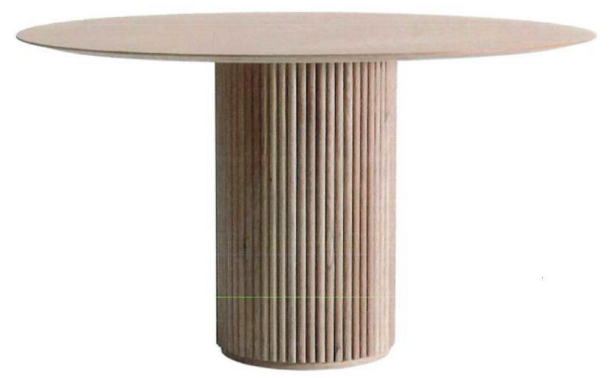 , Case C-795/23:
 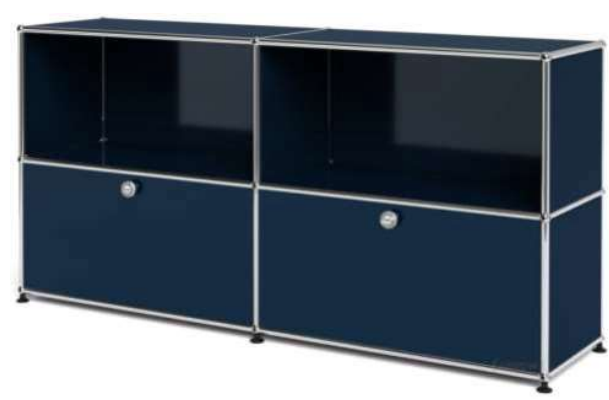 .
.
Judgment
The CJEU expressly clarified that an object of applied art can be considered a ‘work’ within the meaning of Directive 2001/29/EC on the harmonisation of certain aspects of copyright and related rights in the information society only if it reflects the personality of its author through free and creative choices. Choices dictated by technical constraints, standards or other circumstances that leave no real freedom cannot in themselves justify originality. The CJEU also emphasised that circumstances related to the creative process, such as the author’s intentions, sources of inspiration or the use of already available forms, may be taken into account, but are only ancillary circumstances and are neither necessary nor decisive for a finding of originality. Consequently, it noted that the originality of applied art objects should be assessed according to the same requirements as those applied to the assessment of the originality of other types of objects. Therefore, the assessment of originality should not be more strict in relation to applied art objects than in relation to other works.
As regards the relationship between copyright and design law, the CJEU recalled that the protection granted to designs and the protection granted by copyright are not mutually excluding. However, it pointed out that the grounds for protection, i.e. novelty and individual character on the one hand, and originality on the other, should not be confused. The accumulation of claims is therefore only possible if the autonomous conditions are met.
Regarding the demonstration of infringement, the CJEU replied that in order to establish copyright infringement, the national court must determine whether the creative elements of the protected design have been taken over in a ‘recognisable’ manner in the object alleged to constitute an infringement. In this part of the judgment, the Court also stated that the overall visual impression and the degree of originality of the work in question are not relevant to the fulfilment of this requirement. The Court recalled that the possibility of the existence of similar works cannot in itself exclude protection, although the fact that similar designs existed previously may be an indication of a low degree of originality. The CJEU therefore emphasises the need to demonstrate a recognisable appropriation of creative elements. However, it does not explain what is the appropriate standard for assessing such recognisability, i.e. whether the assessment should be made by the average consumer or by a person knowledgeable in industrial design.
Summary
In its judgment of 4 December 2025, the CJEU clarifies the criterion of originality and the issue of proving infringement. It disagreed with the assertion that, in order to be granted protection, an object of applied art should be more original than other types of works. It pointed out that the existence of similar designs or common forms may influence the assessment of the scope of protection, but cannot automatically exclude it. The CJEU judgment should result in the removal of additional protection requirements for works of applied art that exist in some Member States.
Full text of the judgment: LINK

Zobacz też:
Przegląd orzecznictwa TSUE od 2.03 do 13.03.2026 r.
Kowalski przeciwko EUIPO – Hoyer (FLAMBIT – flambriks), Sprawa T‑301/25– Sprawa dotyczyła postępowania w sprawie sprzeciwu wobec rejestracji unijnego znaku towarowego. – Dariusz Kowalski zgłosił do rejestracji poniższy graficzny znak towarowy przedstawiający...
Przegląd orzecznictwa TSUE od 16.02 do 27.02.2026 r.
Opinia Rzecznika Generalnego – 26.02.2026 r. – VG Wort przeciwko TL, sprawa C‑840/24 – Wniosek o wydanie orzeczenia w trybie prejudycjalnym złożony przez Bundesgerichtshof dotyczył wykładni przepisów dyrektywy 2001/29/WE, dyrektywy 2006/115/WE oraz dyrektywy...
Przegląd orzecznictwa TSUE od 2.02 do 6.02.2026 r.
Wyrok TSUE z 5 lutego 2026 r., EUIPO przeciwko Nowhere Co. Ltd, sprawa C‑337/22 P – Sprawa dotyczyła postępowania w sprawie sprzeciwu wobec zgłoszenia graficznego unijnego znaku towarowego APE TEES: – W dniu 30 czerwca 2015 r. Junguo Ye dokonał zgłoszenia unijnego...