

Modular designs and the ‘informed user’ – CJEU judgment in the LEGO case
An EU design must be considered invalid if all the features of its appearance are dictated solely by the technical function of the product to which the design relates (CJEU judgment of 8 March 2018, DOCERAM, C 395/16, EU:C:2018:172). This follows from Article 8(1) of Regulation No 6/2002 on EU designs and from the preamble to that Regulation, which states that technological innovation should not be hampered by granting design protection to features that are solely dictated by their technical function. An EU design also does not cover features of the product that must necessarily be reproduced in exact form and dimensions in order to enable the product to be mechanically assembled or connected.
However, there is an exception to this rule, commonly referred to as the ‘LEGO exception’. An EU design, in accordance with the conditions relating to novelty and individual character, may cover a design that serves to ensure the repeated assembly or connection of interchangeable products within a modular system.
In its latest judgment, the CJEU considered whether the concept of an informed user, relating, inter alia, to the scope of protection conferred by a design, should be interpreted more restrictively in the case of designs relating to modular products. It also considered whether, if the infringement is limited to a small number of modular elements within a larger set, it is possible to refrain from imposing sanctions on the infringer.
CJEU judgment of 4 September 2025 in case C-211/24
Facts of the case
Lego A/S is entitled to two registered EU designs relating to construction toy elements  and
and 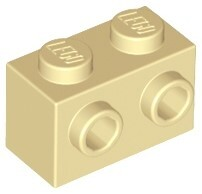 .
.
A Hungarian company attempted to import construction toys containing elements similar to Lego designs into Hungary.
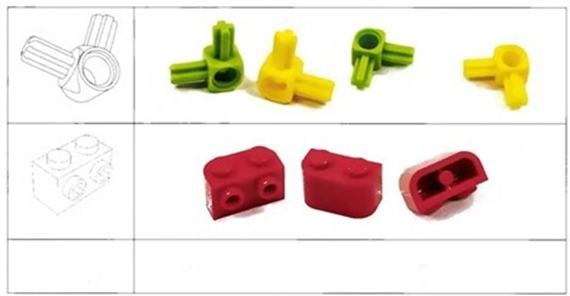
The Hungarian customs authorities seized the disputed goods. Lego applied for an interim measure in the form of maintaining the seizure of the toys, but this was rejected by the court of first instance. The Court of Appeal overturned the decision of the court of first instance, and the Supreme Court upheld that ruling. The courts differed in their assessment of whether the elements in question gave an ‘informed user’ a different overall impression than Lego designs. The scope of protection and possible sanctions were disputed.
The court hearing the infringement case therefore had doubts as to what characteristics an ‘informed user’ should have when assessing the overall impression made on them by designs relating to modular products. The court also had doubts as to the proportionality of possible sanctions. The bricks that could be considered infringing were only a few bricks from the set.
The CJEU’s ruling
The CJEU explained that, in relation to designs relating to modular products, the concept of an ‘informed user’ should be interpreted in the same way as for traditional designs. This means a person with a higher than average level of attention and some knowledge of designs in the industry, rather than a user with in-depth technical expertise. The level of attention may vary according to the specific nature of the industry and, in the case of designs relating to modular products, may be higher, but it should not reach the level of an expert. The Hungarian court of first instance therefore wrongly held that, in the case of modular designs, the concept of an informed user should be interpreted more restrictively, as the user will compare such designs carefully in the smallest details.
The Court also recalled that when assessing the scope of protection, reference should be made to the visual perception of the product by an informed user (lines, contours, shape, etc.). If the connection points have the same shape and dimensions, this may preclude a finding of difference in the overall impression. However, the Court pointed out that when assessing the scope of protection, the degree of freedom of the creator must also be taken into account. The less freedom there is (e.g. due to the functionality of the connecting elements), the smaller the differences that may be sufficient for an informed user to perceive a different overall impression.
Finally, the Court also addressed the court’s doubts as to whether it was relevant that the bricks that could be considered infringing constituted only a small part of the entire set. The CJEU pointed out that the national court’s power to refrain from imposing the measures listed in Article 89(1) of Regulation 6/2002 (e.g. import prohibition, seizure of goods) on special reasons must be interpreted uniformly throughout the EU. The fact that the infringement is limited to a small number of modular elements within a larger set does not in itself constitute a ‘special reason’ for refusing to apply the measures. Only exceptional circumstances can justify such a derogation.
Summary
The CJEU judgment clarifies important issues concerning the protection of designs relating to modular products. It confirms the priority of visual assessment of the overall impression by an ‘informed user’, who should not be considered a technical expert, even when comparing designs relating to modular products. Furthermore, the judgment limits the possibilities for national courts to refrain from applying the measures provided for in Article 89(1) (e.g. import prohibition, seizure of goods) on special reasons. The fact of a partial, limited infringement does not in itself constitute an ‘special reason’.

See more:
Overview of CJEU case law from 2.03 to 13.03.2026
Kowalski v EUIPO – Hoyer (FLAMBIT – flambriks), Case T‑301/25– The case concerned opposition proceedings against the registration of an EU trade mark. – Mr Dariusz Kowalski filed an application for the registration of the following EU figurative sign FLAMBIT for goods...
Overview of CJEU case law from 16.02 to 27.02.2026
Opinion of Advocate General – 26 February 2026 – Verwertungsgesellschaft Wort (VG Wort) v TL, Case C‑840/24 – The request for a preliminary ruling was submitted by the Bundesgerichtshof (Federal Court of Justice, Germany) and concerns the interpretation of provisions...
Review of CJEU case law from 2.02.2026 to 6.02.2026
Judgment of 5 February 2026, EUIPO v Nowhere Co. Ltd, Case C‑337/22 P – The case concerned opposition proceedings relating to the application for registration of the EU figurative trade mark APE TEES: – On 30 June 2015, Mr Ye filed an application for an EU trade...