

Overview of CJEU case law from 1.12 to 7.12.2025
Review of CJEU case law from 20/10/2025 to 26/10/2025
- Judgment – 04/12/2025 – Mio et al. Case C-580/23 (Joined Cases C-580/23, C-795/23)
– The case concerned a preliminary question submitted by the Court of Appeal in Stockholm regarding the concept of a „work” and the protection of works of applied art under copyright law.
– The case concerned a dispute between Asplund (a furniture designer and manufacturer) and Mio (a furniture and home furnishings retailer) over whether dining tables sold by Mio from the „Cord” series infringed Asplund’s copyright in tables from the „Palais Royal” series. Asplund claimed that his tables were protected by copyright as works of applied art.
– Asplund sued Mio, demanding, among other things, a ban on the production, marketing and sale of „Cord” tables.
– Mio defended itself primarily by stating that the „Palais Royal” table does not meet the criteria of originality, so it should not benefit from copyright protection at all.
– The court of first instance agreed with Asplund: it found the „Palais Royal” tables protected by copyright and found that the „Cord” tables constituted an infringement. Mio filed an appeal.
– The Court of Appeal had doubts as to how to specifically examine the „originality” of a utility item as a work under EU law. In practice, the question was whether the evaluation should focus more on the creative process and the designer’s free choices, or rather on the final result itself and its „artistic” expression.
– As a result, the Swedish court referred questions to the CJEU for a preliminary ruling, which concerned two main issues: (i) how to determine whether an industrial design/applied art is a work (ii) how to examine infringement, i.e. what type of similarity is relevant and whether, among other things, the degree of originality of the work and the fact that both designs use commonly available forms are relevant.
– The CJEU indicated that:
(i) the originality of objects of applied art must be assessed according to the same requirements as those applicable to the assessment of the originality of other types of objects;
(ii) a work is an object that reflects the personality of its author, manifested in his free and creative choices. Not only are choices dictated by various constraints, especially technical ones, which bound the author when creating the object, not free and creative, but also those which, although free, do not bear the mark of the author’s personality, giving the said object a unique aspect. Circumstances such as the author’s intentions in the creative process, the author’s sources of inspiration and the use of already available forms, the possibility of similar independent creation or the recognition of the subject matter in specialist circles may, where appropriate, be taken into account, but in any case they are neither necessary nor decisive for establishing the originality of the subject matter for which protection is sought;
(iii) in order to establish a copyright infringement, it must be established whether the creative elements of the protected work have been identifiably incorporated into the subject matter that is claimed to constitute infringement. The overall visual impression produced by the two colliding objects and the degree of originality of the work in question are not relevant. The possibility of similar creation cannot justify refusing protection.
Case details:
- Judgment – 03/12/2025 – Mute v EUIPO – mute-labs (mute labs), Case T-49/25
– The case concerned proceedings concerning an opposition to the registration of a trademark due to the risk of misleading consumers.
– mute-labs GmbH has filed an EU word and figurative trademark:  for goods in classes 19 (including non-metallic sound-absorbing linings) and 20 (including furniture and furnishings with sound-absorbing surfaces).
– Mute sp. z o. o. filed an opposition based on the earlier word-figurative trademark  registered for goods in classes 19 (including wall panels made of non-metallic materials) and 20 (including furniture). The basis for the objection was solely the risk of misleading consumers.
– The Opposition Division upheld the opposition in its entirety. However, the Board of Appeal upheld the appeal and dismissed the opposition, indicating that there was no risk of misleading the public in the case.
– The EU Court dismissed the complaint. It pointed out, among other things, that the conflicting marks are similar as regards their initial element „mute”, however, given that this element is descriptive in nature, its significance in the context of a visual comparison should be limited, despite its positioning at the beginning of those marks.
Case details:
- Judgment – 03/12/2025 – Nokia v. EUIPO – Nooka Space (nooka your space), Case T-617/24
– The case concerned proceedings concerning an opposition to the registration of a trademark due to the risk of misleading consumers.
– Nooka Space Ltd filed a word and figurative trademark application: 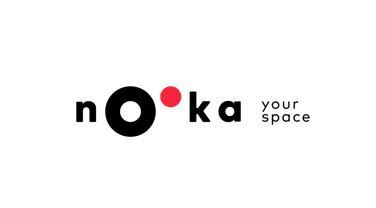 for goods and services in classes 9 (including downloadable software application for booking and ordering office space), 35 (including meeting planning services), 38 (including providing internet chat, messaging services), 42 (including Provision of internet-based computer software for transmitting, processing, storing and sharing photographs, graphics) and 45 (including online social networking services for the rental of office space).
– Nokia Oyj filed an opposition against the registration in respect of all goods and services based, inter alia, on the European Union word mark NOKIA, registered for goods and services, inter alia, in classes 9, 35, 37, 38, 42 and 45, covering a wide range of electronic devices, software, telecommunications services, construction, maintenance and installation of equipment, as well as technological and security solutions aimed at facilitating communication, data processing and digital interaction in various fields.
– The basis for the objection was the risk of misleading consumers.
– The Opposition Division dismissed the opposition.
– The Board of Appeal dismissed the appeal, arguing that there was no likelihood of confusion.
– The EU Court dismissed the complaint. It agreed with the assessment of the Board of Appeal, which found that, in the most favourable scenario for the applicant, the contested trademarks showed very low visual similarity, below average phonetic similarity and conceptual differences.
– The EU General Court indicated, among other things, that the element „noka” or „nooka” does not dominate the visual impression created by the applied-for trademark. He pointed out that the trademark applied for was a fanciful figurative mark with a completely different structure than the earlier mark. Fromit contains, among other things, a black ring and a red circle, which may or may not be interpreted as letters, and the word element „your space”. Although both characters contain the letters „n”, „k”, and „a”, and potentially also „o”, there are important differences between them.
Case details:

See more:
Overview of CJEU case law from 2.03 to 13.03.2026
Kowalski v EUIPO – Hoyer (FLAMBIT – flambriks), Case T‑301/25– The case concerned opposition proceedings against the registration of an EU trade mark. – Mr Dariusz Kowalski filed an application for the registration of the following EU figurative sign FLAMBIT for goods...
Overview of CJEU case law from 16.02 to 27.02.2026
Opinion of Advocate General – 26 February 2026 – Verwertungsgesellschaft Wort (VG Wort) v TL, Case C‑840/24 – The request for a preliminary ruling was submitted by the Bundesgerichtshof (Federal Court of Justice, Germany) and concerns the interpretation of provisions...
Review of CJEU case law from 2.02.2026 to 6.02.2026
Judgment of 5 February 2026, EUIPO v Nowhere Co. Ltd, Case C‑337/22 P – The case concerned opposition proceedings relating to the application for registration of the EU figurative trade mark APE TEES: – On 30 June 2015, Mr Ye filed an application for an EU trade...