

Overview of CJEU case law from 8.12 to 14.12.2025
- LTV Leuchten & Lampen v EUIPO – XAL (Appareils d’éclairage), Case T-82/25
– The case concerned proceedings concerning the invalidation of a design depicting a lamp.
– XAL GmbH is entitled to the following EU design representing a lamp:
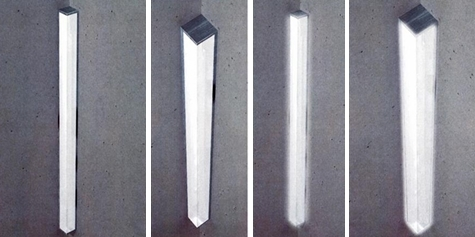
– LTV Leuchten & Lampen Vertriebs GmbH filed an application to invalidate the above-mentioned design due to its lack of novelty and individual character, requesting expert evidence.
– The Invalidity Division dismissed the above-mentioned application, stating that the applicant had not proven disclosure of the earlier design.
– The applicant filed an appeal, to which he attached, among other things, various earlier designs.
– The Appeals Chamber dismissed the appeal. It did not examine whether the earlier designs cited made a different overall impression than the contested design, because they were not filed together with the application for invalidation.
– The EU Court dismissed the complaint. He indicated that any submission of facts or evidence submitted for the first time to the Boards of Appeal shall not be taken into account by the Board of Appeal unless such submission of facts or evidence may be relevant to the resolution of the case and is legally justified. He emphasised that the discretion granted to the Board of Appeal under that provision did not, however, allow it to take into account entirely new evidence relating to older designs that had not been included in the application for a declaration of invalidity.
Case details:
- Cin Valentine v EUIPO – Daw (VAL – – – ACRYL), Case T-518/24
– The case concerned proceedings concerning an opposition to the registration of a trademark.
– Cin Valentine, SA filed the mark VAL — ACRYL for goods in class 2 of the Nice Classification (including paints)
– DAW SE filed an opposition against the registration of this mark based on the earlier word mark Malacryl registered for goods in class 2 (including paints).
– The basis for the objection was the risk of misleading consumers.
– The Opposition Division dismissed the opposition in its entirety.
– The Board of Appeal upheld the appeal in its entirety, indicating that there was a likelihood of confusion. The separation of the elements „val” and „acryl” created by the three connecting elements would not go unnoticed, but those connecting elements have only a limited impact on the visual impression produced by the trade mark applied for, given their lack of distinctive character and the similarities between the other elements of the conflicting marks. The relevant public may also, in its perception of both marks, divide the earlier mark in the same way into two elements: „mal” and „acryl”, because the element „acryl” is strongly allusive in nature, as it evokes the nature or ingredients of the goods at issue.
– The EU Court dismissed the complaint. He agreed that there was a risk of misleading recipients in this case. He shared the view of the Board of Appeal that the term „acryl” did not fully capture the descriptive English term „acrylic”. Consequently, this element has a very weak distinctive character, but is not completely devoid of it.
Case details:
- Savencia v EUIPO – Hofmeister (Forme d’un fromage), Case T-481/24
– The case concerned opposition proceedings against the registration of a three-dimensional trademark.
– Hofmeister Vermögensverwaltungs GmbH & Co. KG filed a three-dimensional trademark application for international registration:
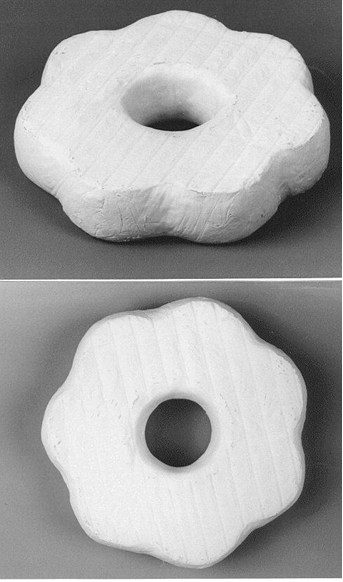 . The mark was filed for goods in Class 29 of the Nice Classification (Milk and milk products, in particular butter, cheese, cream, cottage cheese, milk powder for nutritional purposes; margarine, edible oils and fats);
– Savencia SA filed an opposition against the registration of the above-mentioned mark based on the following earlier three-dimensional trademarks: 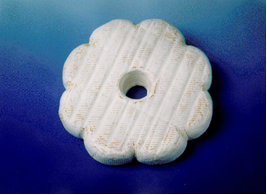 registered for goods in class 29 (cheese);
 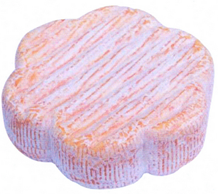 registered for goods in class 29 (Milk, cheese and milk products; oils and fats).
– The basis for the objection was the risk of misleading consumers.
– The Opposition Division upheld the opposition in relation to the goods „milk and milk products, in particular butter, cheese, cream, cottage cheese, milk powder for nutritional purposes; margarine”, but dismissed it in relation to the goods „edible oils and fats”.
– The Board of Appeal upheld the appeal and dismissed the opposition because, taking into account in particular the fact that the earlier mark had only a weak distinctive character, there was no likelihood of confusion due to the lack of identity or similarity of the goods.
– The EU General Court upheld the complaint and annulled the decision of the Board of Appeal. The Court pointed out that while the Board of Appeal formally recognised the distinctive character of the earlier mark in the contested decision, in other parts of that decision it found that the essential design features of that mark were descriptive, which, taking into account the decision as a whole, essentially amounts to denying the distinctive character of that mark. The Board of Appeal essentially denied the de facto existence of any distinctive character of the earlier mark, which prevented it from drawing any inferences from that character when carrying out a comprehensive assessment of the likelihood of confusion. The justification for the decision was therefore internally contradictory.
Case details:
- V4 Holding v EUIPO – V4 Financial Partners (V4 Financial Partners), Case T-275/24
– The case concerned trademark invalidation proceedings.
– V4 Holding, as filed an application for invalidation of the following EU trademark:  registered for services in class 35 (including business management consultancy services) and services in class 36 (debt consultancy services).
– the invalidation application was based in particular on the Slovak mark:  registered for services in class 35 (including business management) and class 36 (including financial services).
– The basis for invalidation was the risk of misleading consumers.
– The Cancellation Board upheld the application for a declaration of invalidity in its entirety.
– The Appeals Chamber upheld the appeal.
– The EU Court upheld the complaint. He agreed that the element “v4” is dominant, but has low distinctiveness because it refers to the Visegrad Group. The Court stated that, although the inherent distinctive character of the earlier mark is low, the fact remains that an average degree of visual similarity, combined with a high degree of phonetic similarity and at least an average degree of conceptual similarity, of the marks at issue means that at least a small part of the relevant public that recognises the number 4 in the contested mark, even if its level of attention is high in relation to all the services at issue, is likely to consider that the services at issue, which are identical or similar, originate from the same undertaking or from economically linked undertakings.
– In accordance with the principle of interdependence, the Court found that in this case there was a likelihood of confusion on the part of at least a significant part of the relevant public as regards the conflicting signs.
Case details:

See more:
Review of CJEU case law from 2.02.2026 to 6.02.2026
Judgment of 5 February 2026, EUIPO v Nowhere Co. Ltd, Case C‑337/22 P – The case concerned opposition proceedings relating to the application for registration of the EU figurative trade mark APE TEES: – On 30 June 2015, Mr Ye filed an application for an EU trade...
Review of CJEU case law from 26.01.2026 to 30.01.2026
Judgment – of 28 January 2026 – Montepelayo, SLU v. EUIPO, Case T-203/25– The case concerned opposition proceedings against the registration of an EU word mark. – Montepelayo, SLU filed an EU word mark application for TELOTRÓN for goods and services in Classes 5...
Review of CJEU case law from 19.01.2026 to 23.01.2026
Hesse v EUIPO – 19.01.2026 – Ferrari (TESTAROSSA), Case C‑597/25 P– The case concerned the procedure under Article 58a of the Statute of the Court of Justice for determining whether an appeal against a judgment of the General Court in EU trade mark proceedings should...