

Review of CJEU case law from 12.01.2026 to 16.01.2026
Judgment – 15 January 2026 – bluechip, Case C‑822/24
– The case concerned a reference for a preliminary ruling on the interpretation of Article 5(2)(b) of Directive 2001/29/EC. The question related to the compatibility with EU law of a national system of fair compensation for private copying (corresponding to private copying levies), in particular as regards the obligation imposed on manufacturers, importers and traders of storage media to pay such compensation where the media are sold to commercial end users, even though such users acquire the media for professional or commercial purposes.
– bluechip is a company which manufactures, imports and trades in PCs, notebooks and workstations with a built-in hard drive.
– The Zentralstelle für private Überspielungsrechte (ZPÜ), an association of German collecting societies, sought payment from bluechip Computer AG of remuneration intended to finance fair compensation (private copying levy) for computers equipped with hard drives placed on the market between 2014 and 2017, including devices sold to commercial end users. Since those computers contained hard drives, they were regarded as storage media capable of being used to make reproductions for private use.
– bluechip Computer AG contested the existence of such an obligation with regard to sales to commercial end users, stating that the devices were not used for making copies for private use.
– The court of second instance held that, given the technical capability of the devices manufactured and marketed by bluechip to be used for making copies for private use, it was permissible to rely on a rebuttable presumption that such copies would be made, with the consequence that the burden of rebutting lies with the manufacturer, importer or trader of the storage media.
– The Bundesgerichtshof expressed doubts as to the scope of Article 5(2)(b) of Directive 2001/29 and referred a question to the Court of Justice concerning the permissibility of applying such a rebuttable presumption where storage media are sold to commercial end users.
– In particular, the referring court sought clarification as to whether a Member State:
- may impose an obligation to pay fair compensation on manufacturers, importers and traders even where the final purchaser is a commercial end user,
- what conditions must be met for such a system to comply with EU law, specifically with the requirement of maintaining a fair balance between the interests of rightholders and users.
– The Court ruled as follows:
- Article 5(2)(b) of Directive 2001/29/EC of the European Parliament and of the Council of 22 May 2001 must be interpreted as meaning that:
- it does not preclude a national rule under which manufacturers, importers and traders of storage media that may be used for making reproductions are required to pay the fair compensation provided for in that provision when such media are sold to commercial end users, unless those manufacturers, importers or traders establish that the media are not used by natural persons for reproductions for private use and for ends that are neither directly nor indirectly commercial, or are used in such a way solely on a scale regarded as not causing more than minimal harm to rightholders.
– In other words, the Court held that a Member State may levy private copying compensation on storage media sold to commercial end users where practical difficulties exist in identifying end users and the purpose of use, provided that manufacturers, importers and traders have access to an exemption or an effective right to reimbursement where they demonstrate that the media are not used, or are used only to a minimal extent, for private copying.
Case details:
https://eur-lex.europa.eu/legal-content/EN/TXT/HTML/?uri=CELEX:62024CJ0822
Judgment – 14 January 2026 – LEGO A/S v EUIPO and Guangdong Qman Toys Industry – Case T‑628/24
– The case concerned an action brought by LEGO A/S against a decision of EUIPO declaring invalid a registered Community design representing a building block from a toy construction set. The ground for invalidity was the lack of individual character — according to EUIPO, the LEGO design did not produce a different overall impression from that produced by the earlier design.
Contested design
REUD 1050645‑003
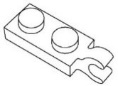
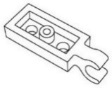
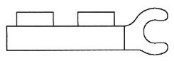

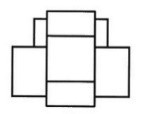
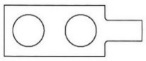
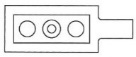
– As the earlier design, reliance was placed on an element made available to the public on the website Brickset (a website documenting LEGO bricks and sets), namely part No 61252, belonging to a LEGO set. LEGO, for its part, claimed that the shape, proportions, number of studs and the underside of the element clearly distinguished its design from the earlier design.
Earlier design
Part No 61252 belonging to set No 7241 “Fire Car”

– The designs coincided as regards their essential features, whereas differences such as the rectangular shape instead of a square shape were regarded as a repetition of the same design motif, rather than as a new visual configuration.
– The Court held that, despite certain differences, the key visual elements of both designs were very similar: a plate of comparable thickness, a cylindrical stud on the upper surface, a characteristic crescent‑shaped clamp on a side wall, and smooth surfaces.
– Differences such as a rectangular shape instead of a square shape or the presence of an additional stud were assessed as having only a minor impact on the overall impression, since they are perceived merely as an extension or repetition of an existing motif.
– The Court emphasised that, although the designer of toy building blocks enjoys a wide degree of freedom, at such a level of freedom minor differences in shape, proportions or in the number of identical elements repeated symmetrically are not sufficient to produce a different overall impression.
– The cylindrical element on the underside of the contested design (which was absent from the earlier design) was regarded as having limited significance, since it is typically not visible in normal use (after the elements are connected), serves a technical function, and does not dominate the perception of the informed user.
– The Court found that there was no clearly different overall impression despite the existence of certain detailed differences. The action was therefore dismissed.
Case details:
https://eur-lex.europa.eu/legal-content/EN/TXT/HTML/?uri=CELEX:62024TJ0628
Judgment – 14/01/2026 – Ionfarma SL v. EUIPO, Case T-230/25
– On 5 December 2022, two individuals, Carmelo Manola and Irene Simeone, filed an application with EUIPO for the registration of the EU word mark DESMOMED.
– The application covered goods in:
- Class 3: Essential oils and aromatic extracts; Tailors’ and cobblers’ wax; fragrancing preparations (including those not for personal use); animal grooming preparations; Toiletries
- Class 5: Dietary supplements and dietetic preparations; Dental preparations and articles; and medicated dentifrices; Dental preparations and articles’.
– The application was opposed by Ionfarma SL, relying on its earlier word mark DERMOMED, registered in 1988. That mark was registered for Class 5 goods (adhesive plasters, gauzes, bandages, dressings and cottons). Thus, the category of goods for which DERMOMED was registered in Class 5 differed to some extent from the goods for which registration of DESMOMED was sought in Class 5.
– The dispute concerned the question whether the goods covered by DESMOMED and those covered by DERMOMED were sufficiently similar to establish a likelihood of confusion within the meaning of Article 8(1)(b) of Regulation 2017/1001.
– EUIPO rejected the opposition filed by Ionfarma SL. The opposition was upheld only for the goods “dental preparations and articles” in Class 5 covered by the contested mark.
– In its judgment, the General Court endorsed the reasoning of EUIPO, highlighting in particular the following points:
- Goods in Class 3 are aimed at the general public, which shows an average level of attention, whereas goods in Class 5 are aimed at the general public displaying at least an above‑average level of attention, as well as at medical specialists (such as doctors and pharmacists) who demonstrate a high level of attention. Since Class 5 goods target both the general public and specialists, the likelihood of confusion must be assessed from the perspective of the public showing the lowest level of attention, namely the general Spanish public with an average degree of attentiveness.
- The Court also emphasised that Ionfarma SL had wrongly relied on excerpts from earlier EUIPO decisions. It recalled that the legality of decisions on trade mark registration must be assessed solely on the basis of Regulation 2017/1001, not on earlier decision‑making practice.
– When examining the conditions for refusal of the registration of the mark DESMOMED (identity or similarity of the marks and identity or similarity of the goods), the Court reached the following conclusions:
- With regard to Class 3 goods, the Court noted that consumers would not expect such distant categories of goods to originate from the same commercial undertaking or economically linked undertakings.
- With regard to Class 5 goods, the Court held that the goods covered by the earlier and later marks were neither complementary nor competitive. It agreed with EUIPO that the earlier and later goods differ in nature, intended purpose and method of use, and are not complementary. The Court rejected Ionfarma SL’s argument that the goods were all pharmaceutical or medicinal in nature, originated from the same pharmaceutical companies or laboratories, and were distributed through the same channels. The Court stressed that at the time of registration of the earlier mark DERMOMED, these goods did not belong to the same category within Class 5. Moreover, the earlier mark covered goods intended to support the healing of wounds or injuries, whereas the goods “dietary supplements” and dietetic preparations covered by the later mark aim to supplement the diet and support general health.
– Thus, the Court upheld EUIPO’s reasoning. The action was dismissed in its entirety.
Case details: https://eur-lex.europa.eu/legal-content/EN/TXT/HTML/?uri=CELEX:62025TJ0230
Judgment – 14/01/2026 – Froneri Bulgaria EOOD v. EUIPO, Case T-517/24
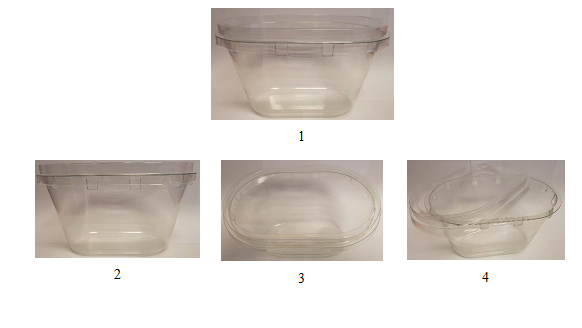
– The case concerned the application for a declaration of invalidity of a registered EU design representing a container with a lid (ice‑cream packaging), on the grounds of an alleged lack of individual character and novelty. The design had been registered by Daesef AD. The invalidity application was filed by the ice‑cream producer Froneri Bulgaria EOOD. Representation of the contested design:
– The invalidity application was based on the alleged lack of novelty and individual character of the contested design in comparison with the following earlier designs:
EU design No 3465541‑0001
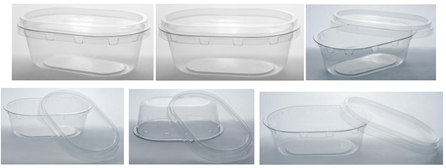
Designs of various ice‑cream containers marketed under the Familia trade mark
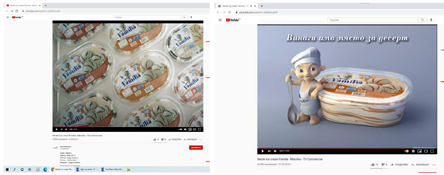
– The Invalidity Division and subsequently the EUIPO Board of Appeal held that the Daesef design differed sufficiently from the earlier designs, produced a different overall impression on the informed user, and was therefore new and possessed individual character within the meaning of Articles 5 and 6 of Regulation No 6/2002.
– The Court noted that the base of the contested design was smaller and more compact, whereas the earlier designs had a larger and more elongated base.
– The Court further confirmed the Board of Appeal’s finding that the sides (lateral walls) of the contested design were taller than those of the earlier designs. As a result, the bottom‑to‑top proportion of the contested design was more pronounced than in the earlier designs.
– The Court held that, when assessing individual character, it is not decisive that the informed user often sees such containers mainly from above or when they are filled with foodstuffs. The Court also stated that even when containers are stacked or filled, the informed user will still be able to clearly perceive their shape, including differences in length, width and height, which determine their relative proportions.
– With regard to the applicant’s arguments concerning the actual dimensions of the products, the Court recalled settled case-law that design protection concerns the design itself, not the actual physical dimensions of the products to which the designs are applied. Therefore, arguments based on actual measurements were irrelevant when comparing the overall impression of the designs (Radiators for heating, T‑83/11 and T‑84/11).
– The Court found that the conical form of the Daesef container distinguished it from the earlier design and therefore the designs could not be regarded as similar. According to the Court, the common features (two‑piece construction, lid, transparent material) did not eliminate the differences in the overall impression. Since the design possessed individual character, it also satisfied the requirement of novelty.
– The Court thus dismissed the action.
Case details: eur-lex.europa.eu/legal-content/EN/TXT/HTML/?uri=CELEX:62024TJ0517
Judgment – 14/01/2026 – Kimpton Hotel & Restaurant Group LLC v. EUIPO (Cases T-619 and T-621/24)
– The dispute concerned oppositions to the registration of the word marks KIMKOM and KIMSUM, filed by Kamstar GmbH for services in Class 43. The oppositions were filed by Kimpton Hotel & Restaurant Group LLC based on the earlier EU word mark KIMPTON, protected for hotel, restaurant, catering and reservation services in Class 43.
– EUIPO partially upheld the oppositions, finding a likelihood of confusion for most of the services, but rejected them with respect to the services described as “day-care and elderly care facilities”.
– The Board of Appeal found a likelihood of confusion for part of the services, but excluded “elderly care facilities”. The Court corrected that assessment, finding that the services “elderly care facilities” were, in essence, identical to “retirement home services” and “provision of accommodation”. These services have the same purpose, nature and target public, and involve both accommodation and continuous care.
– The Court confirmed that the marks KIMKOM, KIMSUM, and KIMPTON are visually similar to an average degree, phonetically similar to an average or high degree, and conceptually not comparable, since they have no semantic meaning.
– The Court rejected EUIPO’s interpretation under which “elderly care facilities” would constitute a separate category only weakly similar to “resort hotel services”. Examining both the English and German versions of the lists of services, the Court held that “elderly care facilities” and “retirement home services” in fact designate the same type of services: accommodation and care for elderly persons who often require constant support. Since EUIPO had already considered “retirement home services” to be identical to “provision of accommodation”, the Court found that “elderly care facilities” must likewise be regarded as identical to the services covered by the earlier mark KIMPTON. Treating the two terms differently was an error of assessment.
– Thus, according to the Court, given the average visual and phonetic similarity of the marks and the identity of the services, there existed a likelihood of confusion.
– The Court annulled the decisions of the Board of Appeal insofar as they found no likelihood of confusion for “elderly care facilities”, and amended them by ordering the rejection of the applications for the marks KIMKOM and KIMSUM in that part.
Case details: eur-lex.europa.eu/legal-content/EN/TXT/HTML/?uri=CELEX:62024TJ0619
Judgment – 14/01/2026 – Leone v. EUIPO, Case T-64/25
– The case concerned invalidity proceedings against the EU word mark LEONE, registered for ice creams and ices in Class 30. The invalidity action was filed by Lisa Leone, Giorgio Leone and their company Leone & Leone OG, relying on earlier rights to a name under Austrian law, pursuant to Article 60(2)(a) of Regulation 2017/1001.
– The applicants claimed that the contested mark infringed their earlier rights protected under Austrian law:
– the right to the surname Leone, used by Lisa and Giorgio Leone in their business dealings;
– the right to the company name Leone & Leone OG (registered in 2012);
– the right to the name “Leones”, used in business dealings since 2013 as the signage for their ice‑cream shops and on their goods.
– The Cancellation Division rejected the invalidity application, finding that the evidence did not demonstrate an “interest worthy of protection” under Austrian law and that the contested mark could not be associated by the relevant public with the applicants.
– The Board of Appeal dismissed the appeal on the ground that all relief on rights fell within Article 60(1)(c) (non‑registered trade marks or other signs used in the course of trade) and therefore did not fall within Article 60(2)(a). Accordingly, the Board held that the invalidity claim based on Article 60(2)(a) was unfounded.
– The Court held that the wording of Article 60(2)(a) does not allow a restrictive interpretation limiting the “right to a name” to personality rights. The provision also covers commercial exploitation of a name, consistent with the CJEU judgment Edwin v OHIM (C‑263/09 P).
– The Court noted that neither Article 60(2)(a) nor any other provision of EU law defines the content of the “right to a name” nor the conditions for prohibiting the use of an EU trade mark. These elements must be determined exclusively by national law (quoting directly, „Article 60(2)(a) of the regulation does, however, make a reference to national law for that purpose, as is clearly apparent from the wording ‘another earlier right under the … national law governing its protection’”).
– The Court emphasised that trade names, company names and business names may fall within the “right to a name” under Article 60(2)(a), since this provision does not exclude such names and national law may protect them as earlier rights.
– The Court rejected the Board’s view that use “in the course of trade” automatically excludes a right from Article 60(2)(a). The distinction between Article 60(1)(c) and Article 60(2)(a) depends on the nature of the right, not on its commercial use. Names used to identify a person or undertaking as such may fall under Article 60(2)(a).
– The Court highlighted EUIPO’s duty to obtain information on national law of its own motion, where needed, particularly when national provisions (§ 43 ABGB, § 9 UWG, § 12 Markenschutzgesetz) have been invoked and evidence or claims regarding their meaning were submitted.
– The Court found that the Board of Appeal did not assess the content of Austrian law, nor the conditions under which Austrian law could prohibit the use of the contested EU trademark. The Board instead dismissed the application solely because the names were used in the course of trade (an approach inconsistent with the wording and structure of Article 60(2)(a)).
– The Court held that the Board of Appeal also misinterpreted Austrian law by assuming that names used in business acquire a “secondary meaning” and cannot be protected under § 43 ABGB. The Board failed to analyse whether those provisions, together with § 9 UWG and § 12 Markenschutzgesetz, could protect the applicants’ rights as “rights to a name”.
– The Court concluded that the Board of Appeal’s assessment of both Article 60(2)(a) and the Austrian legislation was legally flawed. Since the Board relied on an incorrect premise and failed to examine the national-law basis of the invoked rights, the second plea was upheld.
– The Court annulled the contested decision in its entirety.
Case details: https://eur-lex.europa.eu/legal-content/EN/TXT/HTML/?uri=CELEX:62025TJ0064

See more:
Review of CJEU case law from 2.02.2026 to 6.02.2026
Judgment of 5 February 2026, EUIPO v Nowhere Co. Ltd, Case C‑337/22 P – The case concerned opposition proceedings relating to the application for registration of the EU figurative trade mark APE TEES: – On 30 June 2015, Mr Ye filed an application for an EU trade...
Review of CJEU case law from 26.01.2026 to 30.01.2026
Judgment – of 28 January 2026 – Montepelayo, SLU v. EUIPO, Case T-203/25– The case concerned opposition proceedings against the registration of an EU word mark. – Montepelayo, SLU filed an EU word mark application for TELOTRÓN for goods and services in Classes 5...
Review of CJEU case law from 19.01.2026 to 23.01.2026
Hesse v EUIPO – 19.01.2026 – Ferrari (TESTAROSSA), Case C‑597/25 P– The case concerned the procedure under Article 58a of the Statute of the Court of Justice for determining whether an appeal against a judgment of the General Court in EU trade mark proceedings should...