

Review of CJEU case law from 2.02.2026 to 6.02.2026
Judgment of 5 February 2026, EUIPO v Nowhere Co. Ltd, Case C‑337/22 P
– The case concerned opposition proceedings relating to the application for registration of the EU figurative trade mark APE TEES:
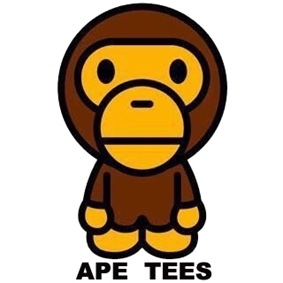
– On 30 June 2015, Mr Ye filed an application for an EU trade mark for the figurative sign APE TEES in Classes 3, 9, 14, 18, 25 and 35.
– On 8 March 2016, Nowhere Co. Ltd, a well-known streetwear fashion house, filed a notice of opposition under Article 8(4) of Regulation No 207/2009, relying on earlier non‑registered figurative trade marks used in the course of trade in the United Kingdom and on the UK law of passing off:



– The Opposition Division rejected the opposition, and the Second Board of Appeal dismissed the first appeal. That initial decision was later revoked by the Board of Appeal due to an obvious error.
– In its second decision of 10 February 2021 – adopted after the expiry of the transition period following the withdrawal of the United Kingdom from the EU – the Board of Appeal again dismissed the appeal, holding that rights existing in the UK could no longer constitute “earlier rights” within the meaning of Article 8(4), since the law of the United Kingdom no longer constituted “the law of a Member State”.
– The General Court annulled that decision, relying on its previous case‑law (notably BROWNIE, T‑598/18), and held that the existence of a relative ground for refusal must be assessed only at the date of filing of the EU trade mark application, irrespective of later changes affecting the earlier right.
– The Court of Justice set aside the General Court’s judgment and held that an earlier right must exist both on the filing date and on the date of the decision of EUIPO. CJEU stated that Article 8(4)(b), drafted in the present tense (“the sign confers on its proprietor the right to prohibit…”), requires the earlier right to be capable of conferring such a right at the relevant time.
– CJEU underscored that after 31 December 2020, the law of the United Kingdom is no longer the law of a Member State, and thus, pursuant to the principle of territoriality, no conflict can exist between an EU trade mark effective only within the Union and earlier rights existing solely in a third State.
– The Court therefore confirmed that UK‑based earlier rights cannot be relied upon in opposition proceedings after the expiry of the transition period.
– As a result, the Court of Justice set aside the judgment of the General Court and dismissed the action brought by Nowhere Co. Ltd, as its earlier non‑registered UK rights could not validly be taken into account by the Board of Appeal at the time it adopted the contested decision.
Case details: https://infocuria.curia.europa.eu/tabs/document/C/2022/C-0337-22-00000000PV-01-P-01/ARRET/315170-EN-1-html
Judgment – 04/02/2026 – Médis v EUIPO – RGCC Holdings (WelMedis), Case T‑142/25
– The case concerned opposition proceedings relating to the assessment of likelihood of confusion under Article 8(1)(b) of Regulation 2017/1001.
– On 3 May 2022, RGCC Holdings AG filed an application for the following EU figurative trade mark “WelMedis”:

The application claimed Swiss priority from 17 December 2021, for the following Nice Classification classes:
– Class 3: soaps, perfumery, essential oils, cosmetics, hair lotions;
– Class 44: hygienic and beauty care, beauty salon services, consultancy in body and beauty care.
– On 2 August 2022, Médis – Companhia portuguesa de seguros de saúde, S.A. filed a notice of opposition, relying on earlier international registration No 597679 of the figurative mark “médis”:

The aforementioned figurative mark covered:
– Class 5: pharmaceutical, veterinary and hygienic products for medical purposes, disinfectants;
– Class 41: educational and training services relating to health and well‑being;
– Class 44: health care, including services of doctors, hospitals and other health care providers.
– The opposition was based on Article 8(1)(b) – likelihood of confusion.
– The Opposition Division rejected the opposition (19 March 2024), holding that although the goods and services were partially similar, the differences between the signs were sufficient for the relevant public to distinguish them with certainty.
– Médis appealed, but the Second Board of Appeal dismissed the appeal on 13 December 2024 (R 1017/2024‑2), finding a very low degree of visual similarity, a below‑average degree of phonetic similarity, a low degree of conceptual similarity, and no identity between the respective goods and services.The Board concluded that no likelihood of confusion existed for the relevant Portuguese public, which displays an average to high level of attention.
– Médis brought an action before the General Court, alleging incorrect assessment of the distinctive character of the term “médis”, errors in the visual and phonetic comparison of the signs and a failure to consider earlier decisions of EUIPO, Portuguese courts and the INPI.
– The General Court dismissed all arguments, stating that the term “médis” has a low degree of distinctiveness, being linked to the root “med/medi”. The Court also found that although the sequence “medis” appears entirely within “WelMedis”, the presence of “wel” and the different graphic compositions significantly reduce similarity,
– The General Court held that visual similarity remains very low, and phonetic similarity is below average, the conceptual similarity is low, the shared component “medis” has weak distinctive character, thus contributing minimally to the global assessment. Additionally, the Court underscored that earlier national and EUIPO decisions cannot bind the the Court, as the trade mark assessment must be carried out individually for each case.
– The Court emphasised that the Portuguese public (both general consumers and professionals in health and beauty sectors) displays an above‑average level of attention, further reducing any likelihood of confusion.
– The General Court thus held that no likelihood of confusion exists and dismissed the action in its entirety.
Case details: https://infocuria.curia.europa.eu/tabs/document/T/2025/T-0142-25-00000000PI-01-P-01/ARRET_NP/315153-EN-1-html

See more:
Review of CJEU case law from 26.01.2026 to 30.01.2026
Judgment – of 28 January 2026 – Montepelayo, SLU v. EUIPO, Case T-203/25– The case concerned opposition proceedings against the registration of an EU word mark. – Montepelayo, SLU filed an EU word mark application for TELOTRÓN for goods and services in Classes 5...
Review of CJEU case law from 19.01.2026 to 23.01.2026
Hesse v EUIPO – 19.01.2026 – Ferrari (TESTAROSSA), Case C‑597/25 P– The case concerned the procedure under Article 58a of the Statute of the Court of Justice for determining whether an appeal against a judgment of the General Court in EU trade mark proceedings should...
Review of CJEU case law from 12.01.2026 to 16.01.2026
Judgment – 15 January 2026 – bluechip, Case C‑822/24 – The case concerned a reference for a preliminary ruling on the interpretation of Article 5(2)(b) of Directive 2001/29/EC. The question related to the compatibility with EU law of a national system of fair...