

Geographical indications for craft and industrial products
For many years, geographical indications for wines and spirits, as well as agricultural products and foodstuffs, have been protected at EU level. With the entry into force of Regulation No 2023/2411 on 1 December 2025, the protection of geographical indications at EU level will also cover craft and industrial products.
As of 1 December 2025, more than 30 applications have already been published in the EU register, such as:
|
Bonecos de Estremoz No EUGICI000000034 |
https://pl.wikipedia.org/wiki/Gliniane_
|
Traditional, handmade ceramic figurines made of clay, which are a unique element of the cultural heritage of the Alentejo region in Portugal. |
|
Pierre de Bourgogne No EUGICI000000013 |
https://www.brachot.com/pl/
|
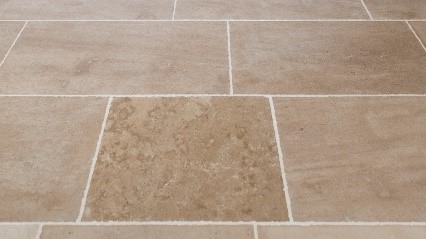
French limestone ranging in colour from cream to light brown. |
|
Porcelaine de Limoges No EUGICI000000001
|
https://www.antykiporcelana.pl/
|
Porcelain from Limoges (France). The city of Limoges maintains the position it gained in the 19th century as the leading porcelain-producing city in France. |


It should be emphasised that the protection of geographical indications for craft and industrial products covers the protection of the names of these products, not their appearance.
What are craft and industrial products?
The preamble to Regulation 2023/2411 (point 5) lists products such as natural stones, wood products, jewellery, textiles, lace, cutlery, glass, porcelain, leather and skins. The definition in Article 4 of the above-mentioned Regulation states that craft and industrial products are products:
- produced either entirely by hand or with the aid of manual or digital tools, or by mechanical means, whenever the manual contribution is an important component of the finished product; or
- produced in a standardised way, including serial production and by using machines;
What are the requirements for geographical indications for craft and industrial products?
In order for the name of a craft or industrial product to be eligible for protection as a geographical indication, the product must meet the following requirements:
- the product originates in a specific place, region or country;
- the product’s given quality, reputation or other characteristic is essentially attributable to its geographical origin; and
- at least one of the production steps of the product takes place in the defined geographical area.
The application for registration must include, among other things, proof that the product originates in a specific geographical area, including a list of the stages of production that take place in that specific geographical area.
Registration of a geographical indication
The registration procedure consists of two stages. The first stage takes place at national level and the second stage at EU level.
The application for registration of a geographical indication is submitted to the competent authority of the Member State (in Poland, this authority is the Polish Patent Office) from which the product originates. After publication of the indication, third parties may lodge an objection to the registration.
Once the national stage is complete, the application is forwarded to the EUIPO, which conducts further proceedings.
Search engine for geographical indications, including for craft and industrial products: https://www.tmdn.org/giview/
Full text of Regulation No 2023/2411: https://eur-lex.europa.eu/eli/reg/2023/2411/oj

See more:
Overview of CJEU case law from 2.03 to 13.03.2026
Kowalski v EUIPO – Hoyer (FLAMBIT – flambriks), Case T‑301/25– The case concerned opposition proceedings against the registration of an EU trade mark. – Mr Dariusz Kowalski filed an application for the registration of the following EU figurative sign FLAMBIT for goods...
Overview of CJEU case law from 16.02 to 27.02.2026
Opinion of Advocate General – 26 February 2026 – Verwertungsgesellschaft Wort (VG Wort) v TL, Case C‑840/24 – The request for a preliminary ruling was submitted by the Bundesgerichtshof (Federal Court of Justice, Germany) and concerns the interpretation of provisions...
Review of CJEU case law from 2.02.2026 to 6.02.2026
Judgment of 5 February 2026, EUIPO v Nowhere Co. Ltd, Case C‑337/22 P – The case concerned opposition proceedings relating to the application for registration of the EU figurative trade mark APE TEES: – On 30 June 2015, Mr Ye filed an application for an EU trade...