

Overview of CJEU case law from 29.06 to 03.07.2026
Attilah v EUIPO – Bella Tawziaa II and Groupe Bellakhdar, Case T‑654/24
– The case concerned invalidity proceedings against an EU trade mark on the ground that the application had been filed in bad faith within the meaning of Article 52(1)(b) of Regulation No 207/2009.
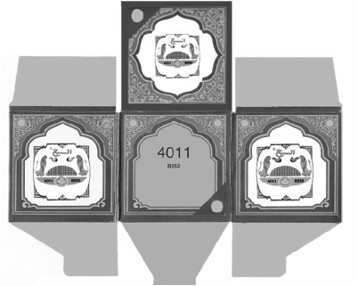
– Driss El Hakmaoui Attilah was involved in Bella Tawziaa II, a company active in the tea sector and cooperating with the Moroccan company Groupe Bellakhdar. On 21 March 2013, the following EU figurative trade mark application was filed for goods in Class 30, including tea, coffee, cocoa, rice, flour, spices and other food products:
– Bella Tawziaa II and Groupe Bellakhdar filed an application for a declaration of invalidity, relying on a number of earlier national, international and EU trade marks used for tea and related products, presented below:


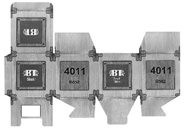
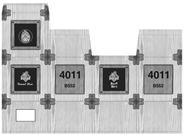
– Bella Tawziaa II and Groupe Bellakhdar argued that the parties had already maintained commercial relations before the filing date and that the applicant was fully aware of their marks and business activities.
– The Cancellation Division upheld the application and declared the contested trade mark invalid on the basis of bad faith.
– The Board of Appeal dismissed the appeal. It found that, at the time of filing, close commercial relations existed between the parties, that the applicant was aware of the interveners’ earlier trade marks, and that the contested sign incorporated elements also present in the interveners’ trade mark portfolio, including numerical indications, lion imagery and Arabic elements.
– The Board of Appeal considered that the filing was not coincidental. It concluded that the applicant sought to take advantage of signs associated with his commercial partners and to benefit from the market position established by Groupe Bellakhdar in the tea sector.
– The applicant argued that lion depictions were commonly used on tea packaging and that the similarities between the signs were insufficient to establish bad faith. He also maintained that Bella Tawziaa II was an independent undertaking, that its relationship with Groupe Bellakhdar was purely commercial in nature, and that he had informed his business partners of the intended filing.
– The General Court dismissed the action. It recalled that bad faith must be assessed globally, taking into account all relevant circumstances of the case, including the relationship between the parties, the applicant’s knowledge of earlier signs, the chronology of events and the objective pursued through the trade mark filing.
– The Court confirmed that, at the filing date, the parties maintained commercial relations based on mutual trust and that the applicant was aware of the earlier signs used by the interveners.
– The Court agreed that the presence of common elements, such as lion imagery, certain Arabic elements and numerical indications, constituted a relevant factor when assessing the applicant’s intentions. In bad-faith proceedings, however, such factors are not examined for the purpose of assessing likelihood of confusion, but rather to determine whether the filing was consistent with honest commercial practices.
– The Court also noted that the applicant subsequently arranged for the transfer of the contested trade mark, as well as other trade mark rights belonging to Bella Tawziaa II, to himself. Those circumstances could legitimately be considered when reconstructing the applicant’s intentions at the time of filing.
– The Court confirmed that a finding of bad faith did not require proof that the earlier trade marks enjoyed a reputation within the European Union. It was sufficient to establish a dishonest filing strategy, although the evidence submitted showed a certain degree of recognition of the earlier signs on the Moroccan market.
– The Court thus held that the contested trade mark had been filed in bad faith, upheld the EUIPO decision declaring the mark invalid and dismissed the action in its entirety.
Case details: https://infocuria.curia.europa.eu/tabs/document/T/2024/T-0654-24-00000000PI-01-P-01/ARRET/322878-EN-1-html
DecoTrend v EUIPO – B.K.Licht (Lampshade), Case T‑40/25
– The case concerned invalidity proceedings against a Registered Community Design depicting a star-shaped lampshade, registered under No 4 031 201‑0004:




– The application for a declaration of invalidity was based on an alleged lack of individual character under Article 6 of Regulation No 6/2002.
– B.K.Licht GmbH & Co. KG applied for a declaration of invalidity against Community design No 4 031 201‑0004 registered by DecoTrend GmbH. The application relied on two earlier star-shaped representations disclosed in Swiss and US patent specifications relating to the same invention, published in 1929 and 1927 respectively:
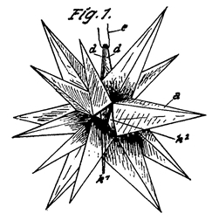
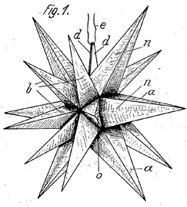
– The intervener argued that the illustrations designated as “Fig. 1” in both patent specifications constituted earlier designs producing the same overall impression as the contested design and therefore deprived it of individual character.
– The Cancellation Division rejected the invalidity application. When assessing individual character, it took into account not only the specific illustrations relied upon by the applicant, but also the remaining drawings and the technical description contained in the patent specifications.
– The Board of Appeal upheld the appeal, set aside the Cancellation Division’s decision and remitted the case for further examination. It found that the Cancellation Division had wrongly based its assessment on elements of the patent specifications that had not been identified as earlier designs. In the Board’s view, the comparison should have been limited to the two specific “Fig. 1” illustrations identified by the applicant as earlier designs D1 and D2.
– DecoTrend brought an action before the General Court. It argued that the earlier illustrations could not be properly interpreted without considering the patent specifications as a whole, including the written description and the remaining drawings. According to the applicant, those additional elements demonstrated that the illustrations represented a foldable illuminated star (“Annaberger Faltstern”) featuring specific recesses, protrusions and a folding mechanism absent from the contested design.
– The General Court dismissed the action. It emphasised that, under Regulation No 6/2002, individual character must be assessed by comparing the contested design with a specific, identified earlier design rather than with a patent or patent specification as such.
– The Court noted that a patent protects an invention, not the appearance of a product. Where a patent specification contains several drawings illustrating different embodiments of an invention, it is for the applicant for invalidity to identify precisely which of those drawings constitute the earlier designs relied upon to challenge novelty or individual character.
– In the present case, the intervener had expressly identified only the two “Fig. 1” illustrations as earlier designs D1 and D2. Consequently, EUIPO was required to assess the individual character of DecoTrend’s design exclusively by reference to those specific representations and not to the patent specifications as a whole.
– The Court agreed with the Board of Appeal that the earlier designs D1 and D2 did not, in themselves, disclose any particular concave recesses, convex protrusions or folding capability. Those features could only be inferred from the technical descriptions and other drawings contained in the patent specifications, which were not the earlier designs relied upon by the intervener.
– The Court further observed that the reference letters, shading and lines appearing in the illustrations did not prevent identification of the product’s appearance and did not alter the fact that the earlier designs simply depicted multi-pointed stars capable of being assessed independently by the informed user.
–The Court thus confirmed the Board of Appeal’s position that, when assessing individual character, only the specifically identified earlier designs D1 and D2 could be taken into account and that the remaining elements of the patent specifications had to be disregarded. The action was dismissed in its entirety.
Case details: https://infocuria.curia.europa.eu/tabs/document/T/2025/T-0040-25-00000000PI-01-P-01/ARRET/322879-EN-1-html
Sandoz v EUIPO – Be Healthy (ARYUNA / ARMUNIA), Case T‑591/24
– The case concerned opposition proceedings against the registration of the EU word mark ARYUNA for goods in Class 5, including tincture of iodine, medicinal tinctures, medicinal herbs, herbal medicines and herbal decoctions. The opposition was based on Article 8(1)(b) of Regulation 2017/1001.
– Novartis AG, subsequently succeeded by Sandoz AG, filed the opposition relying on the earlier Benelux and Austrian word marks ARMUNIA, registered for pharmaceutical preparations, including oral contraceptives and pharmaceutical products for human use.
– The Opposition Division rejected the opposition, finding that there was no likelihood of confusion. The Board of Appeal dismissed the appeal and confirmed that assessment.
– The Board of Appeal held that the relevant public consisted of both the general public and medical and pharmaceutical professionals. It found that professionals display a high level of attention and that the general public also demonstrates a relatively high level of attention because all the goods at issue relate to health.
– The Board further found that the goods covered by the application were identical to the pharmaceutical products covered by the earlier Austrian mark and similar to a below-average degree to the pharmaceutical preparations covered by the earlier Benelux mark.
– As regards the signs, the Board concluded that ARYUNA and ARMUNIA had no meaning for the relevant public and therefore possessed normal inherent distinctiveness. Although the signs shared five letters arranged in the same order (“a”, “r”, “u”, “n”, “a”), the differences in their central elements were considered significant.
– The Board found the signs visually similar to a low degree and phonetically similar to a low degree. Conceptual comparison was considered impossible because neither sign conveyed a specific meaning to the relevant public.
– Before the General Court, Sandoz argued that the established case-law regarding the heightened level of attention of consumers in the pharmaceutical sector should be reconsidered. According to Sandoz, patients, carers and even healthcare professionals frequently confuse medicines in real-life situations, particularly under stress, in emergency situations or after purchase, thereby creating risks to patient safety.
– Sandoz also argued that the assessment of likelihood of confusion should place greater emphasis on post-sale confusion and patient safety considerations rather than on the assumption that consumers exercise a heightened degree of attention when purchasing medicinal products.
– The General Court dismissed the action. It reaffirmed settled case-law that consumers generally display a high level of attention when purchasing pharmaceutical products or health-related goods, regardless of whether those products are available only on prescription or over the counter. The same principle applies to medicinal herbs, herbal medicines and medicinal tinctures.
– The Court held that the assessment of likelihood of confusion cannot be based on the lowest level of attention a consumer may occasionally display in particular circumstances. The relevant question is the average level of attention normally exercised by the relevant public for the category of goods concerned.
– The Court also rejected the argument based on patient safety. It emphasised that Article 8(1)(b) of Regulation 2017/1001 concerns confusion as to the commercial origin of goods. The possibility that a patient may mistakenly take one medicinal product instead of another concerns confusion regarding the identity or characteristics of products, not their commercial origin, and therefore falls outside the scope of the likelihood-of-confusion assessment under trade mark law.
– The Court further noted that the principle of imperfect recollection does not neutralise the effect of a heightened level of attention. On the contrary, consumers exercising a higher degree of attention are less likely to confuse similar marks despite relying on an imperfect memory of them.
– Taking into account the low degree of visual and phonetic similarity between the marks, the normal distinctiveness of the earlier marks and the relatively high level of attention of the relevant public, the Court thus confirmed that there was no likelihood of confusion, even in relation to identical goods. The action was dismissed in its entirety.
Case details: https://infocuria.curia.europa.eu/tabs/document/T/2024/T-0591-24-00000000PI-01-P-01/ARRET_NP/322888-EN-1-html

See more:
AI Legal landscape – how does the European Union regulate artificial intelligence?
AI Legal landscape – how does the European Union regulate artificial intelligence? The growing scale of artificial intelligence applications and the emergence of new legal and social challenges have led to the adoption by the EU of the first comprehensive regulations...
Overview of CJEU case law from 6.07 to 10.07.2026
Judgment – 09/07/2026 – Anne Frank Fonds, Case C‑788/24 – The case concerned a request for a preliminary ruling regarding the interpretation of the concept of “communication to the public” under Article 3(1) of Directive 2001/29, as well as the assessment of the...
Overview of CJEU case law from 15.06 to 19.06.2026
Judgment – 17/06/2026 – Parkster v EUIPO – Ühisteenused (PARKNER), Case T‑412/25 – The case concerned opposition proceedings against the registration of an EU trade mark. – Ühisteenused AS applied for the word mark PARKNER for goods and services in Classes 9, 36, 39...