

Overview of CJEU case law from 14.09 to 18.09.2026
Judgment – 16/09/2026 – Fitmart v EUIPO (ULTRAPURE), Case T-890/25
Contested mark:

Owner: Fitmart GmbH & Co. KG
– The case concerned the registration of the figurative mark ULTRAPURE for goods in Classes 5, 29, 30 and 32, including dietary supplements, dairy products, energy bars and isotonic beverages. The examiner refused registration on the grounds that the mark was devoid of any distinctive character and consisted exclusively of signs or indications which may serve, in trade, to designate the kind, quality, quantity, intended purpose, value, geographical origin or the time of production of the goods or of rendering of the service, or other characteristics of the goods or service. The Fourth Board of Appeal of EUIPO dismissed the applicant’s appeal, relying solely on the absence of distinctive character, finding the mark devoid of distinctive character owing to its banal and laudatory meaning.
– Fitmart argued that the combination of the “ultra” and “pure” would not be understood immediately and unambiguously as a direct reference to the characteristics of the goods, but would trigger a cognitive process in the minds of consumers conferring a minimum degree of distinctiveness on the mark, and that, moreover, the figurative element (yellow background with black lettering) was sufficiently eye-catching to confer the required minimum distinctive character.
– The Court confirmed that the word “pure” – despite being ambiguous in the abstract – would, in relation to goods in the health, food and beverage sector, be immediately understood as referring to the absence of harmful substances and to high quality, while “ultra” is a generic laudatory prefix reinforcing the meaning of the adjective it precedes; the combination of these two well-known words does not create a neologism with a meaning going beyond the mere sum of its parts and does not require the two-step interpretative process typical of distinctive slogans.”,
– As regards the figurative element, the Court confirmed that the simple, legible typeface and basic yellow rectangle, without any element of irony or conceptual tension, are purely decorative and merely reinforce the laudatory message of the word element, and that colour as such, absent other graphic or word elements, is not, as a rule, inherently capable of distinguishing the goods of one undertaking from those of others.
– As regards the second plea, the Court confirmed that the applicant could not rely on earlier EU trade mark registrations containing the elements “ultra” or “pure” separately, since none of the marks relied on combined both elements, and that the legality of a Board of Appeal decision must be assessed solely under Regulation 2017/1001, not on the basis of EUIPO’s earlier decision-making practice.
– The Court dismissed the action brought by Fitmart GmbH & Co. KG in its entirety and, in the absence of a hearing and given that EUIPO’s claim for costs was conditional on a hearing being held, ordered each party to bear its own costs.
Case details: https://eur-lex.europa.eu/legal-content/EN/TXT/?uri=CELEX:62025TJ0890
Judgment – 16/09/2026 – Sudex v EUIPO – Ammunition Operations (Remington SYNERGY WORLD), Case T‑885/25
| Earlier Mark | Contested Mark |
|
REMINGTON REMINGTON UMC
(Owner: Ammunition Operations LLC ) |
(Owner: Sudex OÜ) |
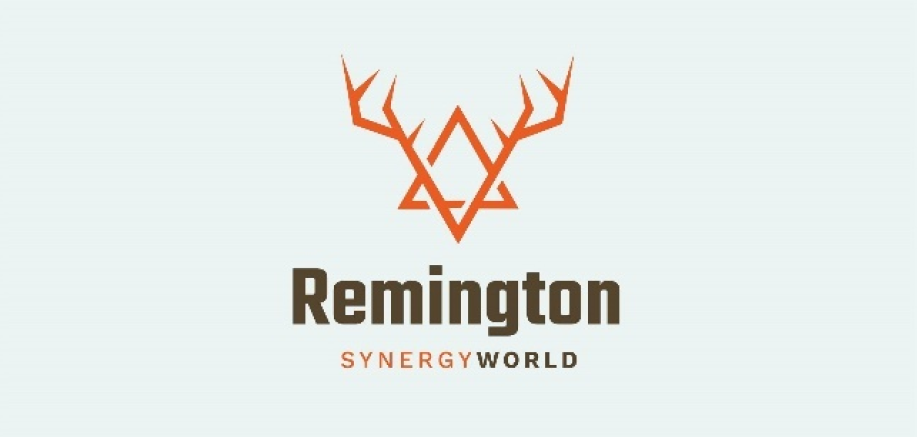
– The case concerned proceedings for a declaration of invalidity of the EU figurative mark Remington SYNERGY WORLD, registered for goods in Classes 18 and 25 (including bags, clothing, footwear and headgear). The application for a declaration of invalidity, filed by Ammunition Operations LLC, relied primarily on the absolute ground for invalidity – bad faith at filing – and, in the alternative, risk of confusion, invoking the earlier EU word marks REMINGTON and REMINGTON UMC, registered inter alia for firearms and ammunition in Class 13.
– The Cancellation Division rejected the application. The Fourth Board of Appeal of EUIPO upheld the appeal, finding, unlike the Cancellation Division, that the applicant (Sudex OÜ) had acted in bad faith at the filing date, and declared the contested mark invalid.
– The applicant relied on a single plea comprising four complaints concerning, respectively: the proximity of the market sectors of the goods, the applicant’s knowledge of the earlier marks, the comparison of the signs, and the applicant’s intention at the filing date. The Court recalled that bad faith is subjective in nature, but must be determined on the basis of an objective, overall assessment of all the relevant circumstances of the case. An application is made in bad faith in particular where it does not serve the purpose of fair competition, but aims to prejudice the interests of a third party or to obtain an exclusive right for purposes other than fulfilling the essential functions of a trade mark, in particular the function of indicating the origin of goods.
– The Court confirmed that the Board of Appeal relied not on the similarity of the goods but on the proximity of the market sectors, noting that goods such as bags, clothing or footwear in Classes 18 and 25, in the absence of any limitation of the list of goods, include, as a broader category, items specifically intended for hunting. Those goods were therefore linked to the hunting market and targeted at the same relevant public as the arms and ammunition designated by the earlier mark REMINGTON. That circumstance was further confirmed by the applicant’s own activities in the hunting sector.
– The Court confirmed that a presumption of the applicant’s knowledge of a third party’s prior use of a mark may arise from the duration of that use (over 200 years in the US, at least since 2008 in several Member States) and from the fact that both parties operated in the same economic sector, and that EUIPO could rely on evidence of use of the earlier mark also outside the EU territory.
– As regards the comparison of the signs, the Court confirmed that, since the earlier mark REMINGTON is entirely included in the contested mark and the additional word element “synergyworld” is laudatory and secondary owing to its size and position, the marks are visually similar to a very high degree and phonetically identical, it not being necessary, for the assessment of bad faith, to establish a likelihood of confusion under the same criteria as in proceedings based on a relative ground for refusal.
– The applicant’s intention was of decisive importance. The General Court accepted the finding that Sudex used the contested mark in variations almost identical to the forms in which the intervener used its signs, and also offered goods linked to hunting as well as more specialized products, such as gun bags and gun cleaning kits. Those circumstances, considered together with the similarity of the signs, the proximity of the market sectors, and the presumed knowledge of the earlier mark, pointed to an intention to create an association in the mind of the relevant public with the intervener’s sign and to take advantage of its recognition and reputation in the hunting market. Such a purpose was considered contrary to honest commercial practices.
– The Board of Appeal and the General Court did not rule on the merits of the second ground for invalidity, as the finding of bad faith was sufficient to declare the mark invalid. An assessment of that ground therefore became devoid of purpose for the resolution of the case.
– The Court dismissed the action brought by Sudex OÜ in its entirety, upholding the declaration of invalidity of the mark Remington SYNERGY WORLD for bad faith, and ordered the applicant to bear the intervener’s costs, while EUIPO was ordered to bear its own costs. The case was won by Ammunition Operations LLC.
Case details: https://eur-lex.europa.eu/legal-content/EN/TXT/?uri=CELEX:62025TJ0885
Judgment – 16/09/2026 – Cobra Golf v EUIPO (ULTRADRY), Case T‑827/25
Contested mark: ULTRADRY
Owner: Cobra Golf Inc.
– The case concerned the application for the EU word mark ULTRADRY for “golf bags” in Class 28. The examiner refused registration on the grounds that the mark was devoid of any distinctive character and consisted exclusively of signs or indications which may serve, in trade, to designate the kind, quality, quantity, intended purpose, value, geographical origin or the time of production of the goods or of rendering of the service, or other characteristics of the goods or service. The Fifth Board of Appeal of EUIPO dismissed the applicant’s appeal, finding the mark descriptive (of a golf bag’s ability to keep its contents dry) and devoid of distinctive character.”,
– The applicant (Cobra Golf Inc.) argued that there was no sufficiently direct and concrete link between the mark and the goods, since the combination of “ultra” and “dry” creates a new and ambiguous commercial impression requiring a mental process on the part of the consumer, and that EUIPO had not shown actual use of the term in relation to golf bags or taken into account its own earlier decision-making practice regarding marks containing the elements “ultra” or “dry”.
– The Court confirmed that, for refusal it suffices that at least one of the possible meanings of the sign designates a characteristic of the goods, and that it is not necessary to show that the sign is actually used in trade at the filing date – it is enough that such use is reasonably foreseeable in the future.
– The Court held that the term “ultradry” (from the basic English words “ultra” and “dry”) would be understood immediately and without further thought by the English-speaking public (including Ireland, Malta and the Nordic countries) as referring to a bag’s ability to keep its contents “extremely dry”, an important characteristic of golf bags used in variable weather conditions, including winter play; there was no need to show that the term is actually used in the trade.”,
– The Court rejected the argument based on the principles of equal treatment and sound administration relying on other EU trade marks containing the elements “ultra” or “dry” separately, noting that none of the marks relied on combined both elements and that decisions of first-instance examiners do not bind the Boards of Appeal, the legality of a Board of Appeal decision having to be assessed solely under Regulation 2017/1001, not on the basis of earlier decision-making practice.
– The Court also confirmed that registration of the mark by third-country authorities is irrelevant to registrability under the autonomous EU trade mark system.”,
– Since the Court confirmed that refusal was justified on the ground of descriptiveness, it found it unnecessary to examine the second plea concerning the absence of distinctive character, as it suffices that one absolute ground for refusal applies.”,
– The Court dismissed the action brought by Cobra Golf Inc. in its entirety and ordered it to pay the costs. The case was won by EUIPO.
Case details: https://eur-lex.europa.eu/legal-content/EN/TXT/?uri=CELEX:62025TJ0827
Judgment – 16/09/2026 – Worldwide Machinery v EUIPO – Scaip (SUPERIOR MANUFACTURING), Case T‑566/25
The case concerned an application for the assignment of a figurative EU trade mark SUPERIOR MANUFACTURING
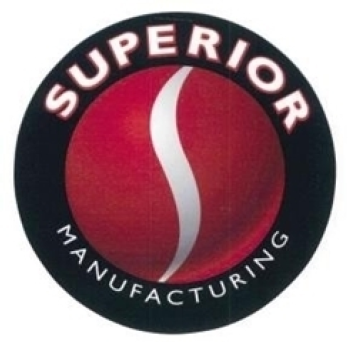
(registered for construction machinery in Class 12), filed by Worldwide Machinery Ltd pursuant to Article 60(1)(b) of Regulation (EU) 2017/1001 (i.e. on the grounds that the application for registration of the trade mark was filed by an agent or representative without the proprietor’s consent), and in the alternative, an application for a declaration of invalidity based on bad faith and copyright infringement. The parties — the machinery manufacturer (Scaip SpA, the predecessor in title of the intervener) and its distributor (Worldwide Machinery Ltd) — had maintained a business relationship since 1996 on the basis of successive distribution agreements concluded in 1996, 2007 and 2013.
– The Cancellation Division upheld the request for assignment, finding that the applicant was the proprietor of an earlier non-registered mark in the United States and that the intervener had acted as its agent or representative without its consent. The Second Board of Appeal of EUIPO upheld the intervener’s appeal, finding – contrary to the Cancellation Division – that it was the applicant which was the intervener’s representative (not the other way round), and that the applicant had not shown that it was the proprietor of an earlier non-registered right in the US or Australia, and referred the case back to the Cancellation Division for further proceedings on the application for a declaration of invalidity.
– The applicant relied on two pleas: misinterpretation of the concept of “agent” or “representative” and incorrect assessment of the existence of a fiduciary relationship and of earlier rights, and insufficient statement of reasons.
– The Court confirmed that the concept of “agent” or “representative” within the meaning of Article 8(3) of Regulation 207/2009 must be interpreted broadly, covering all contractual relationships under which one party represents the interests of the other and is bound by a general duty of trust and loyalty, regardless of the formal classification of the contract – but found that the Board of Appeal had correctly applied that interpretation.
– The Court found that – contrary to the applicant’s submission – neither the 2007 nor the 2013 agreement contained provisions imposing on the intervener (the manufacturer) a duty of trust and loyalty towards the applicant (the distributor); on the contrary, an analysis of the 2007 agreement’s provisions (including the minimum sales volume clause, the non-compete obligation binding only the applicant, and the clause requiring the applicant to protect the intervener’s trade marks) indicated rather that it was the applicant which acted on the intervener’s behalf, not the other way round.
– The Court confirmed that the mere absence of evidence of a separate white-label manufacturing agreement did not permit the intervener to be regarded as the applicant’s agent, and that commercial cooperation towards a common objective does not, in itself, give rise to a fiduciary relationship.
– As regards the alleged earlier rights to a non-registered mark in the US and Australia, the Court confirmed that legal opinions commissioned by the applicant, which made no reference at all to the distribution agreements between the parties and were based on scant evidence, were rightly found by the Board of Appeal to have limited probative value, insufficient to establish ownership of an earlier right.
– The Court rejected the plea alleging a failure to state reasons, finding that the contested decision clearly and sufficiently set out the Board of Appeal’s reasoning, enabling judicial review.
– The Court dismissed the action brought by Worldwide Machinery Ltd in its entirety, ordering it to bear the intervener’s costs, while EUIPO was ordered to bear its own costs. The case was won by Scaip SpA.
Case details: https://eur-lex.europa.eu/legal-content/EN/TXT/?uri=CELEX:62025TJ0566
Judgment – 16/09/2026 – Société des produits Nestlé v EUIPO – European Food (FITNESS), Case T‑509/25
– The case concerned a long-standing dispute, examined on multiple occasions by the EU Courts, regarding an application for a declaration of invalidity of the word EU trade mark FITNESS (registered in 2005 for foodstuffs, cereals and beverages in Classes 29, 30 and 32), brought by European Food SA on the basis of an absolute ground for invalidity concerning the lack of distinctive character of the mark and its descriptive character. The case had already given rise to several judgments of the Court and of the Court of Justice revolving around the admissibility of evidence submitted for the first time on appeal.”,
– Ultimately, the Fifth Board of Appeal of EUIPO, complying with the Court’s 2024 judgment, admitted that evidence and declared the mark FITNESS invalid in its entirety, finding it descriptive.
– The applicant (Société des produits Nestlé SA) raised two pleas in law: the admission of evidence submitted out of time and infringement of the provisions concerning the invalidity of a trade mark on the ground that it was descriptive.
– As regards the first plea, the Court confirmed that the Cancellation Division’s decision, which had found the evidence initially submitted insufficient, constituted a “new factor” justifying – in line with the Court’s earlier, final 2024 judgment – the admission of supplementary evidence at the appeal stage, and that the Board of Appeal correctly and objectively exercised its discretion in reasoned fashion, assessing both the prima facie relevance and the supplementary (rather than new) nature of that evidence.
– The Court rejected the applicant’s argument that the evidence related to a period after the filing date, noting that subsequent evidence may be taken into account where it allows conclusions to be drawn about the situation as it stood on the filing date.
– As regards the second plea, the Court confirmed that, already at the filing date (2001), the term “fitness” was understood by the English-speaking public (Ireland and the United Kingdom) as referring to good physical shape achieved, among other things, through healthy nutrition, and that the evidence – including books, magazines and websites – established a sufficiently direct and concrete link between that concept and all the foodstuffs and beverages covered by the mark, regarded as a sufficiently homogeneous category owing to their capacity to contribute to good health.
– The Court rejected the complaints alleging an overly strict interpretation of descriptiveness and a lack of reasoning as regards individual goods, finding that the authority may rely on general reasoning where the goods form a sufficiently homogeneous category, as was the case here.
– The Court dismissed the action brought by Société des produits Nestlé SA in its entirety, upholding the declaration of invalidity of the mark FITNESS.
Case details: https://eur-lex.europa.eu/legal-content/EN/TXT/?uri=CELEX:62025TJ0509
Judgment – 16/09/2026 – Absara Industrial v EUIPO – Hansgrohe (KROMAT), Case T‑467/25
| Earlier Mark | Contested Mark |
|
CROMA (Owner: Hansgrohe SE) |
KROMAT (Owner: Absara Industrial, SL) |
– The case concerned opposition proceedings against the application for the EU word mark KROMAT for goods in Class 11 (bathroom and sanitary installations, shower and bath fittings). The opposition was based on the earlier EU word mark CROMA, registered inter alia for sanitary installations, fittings and shower systems in Class 11, and relied on the risk of confusion.
– At the applicant’s request, EUIPO invited the opponent to furnish proof of genuine use of the earlier mark. The Opposition Division partially upheld the opposition. The Second Board of Appeal of EUIPO partially upheld the appeal, confirming genuine use of the earlier mark solely for “sanitary facilities, namely shower heads, pipe showers” and finding a likelihood of confusion only in respect of the goods regarded as identical or highly similar to that sub-category.
– The applicant relied on three pleas: admission of late-filed evidence of use, insufficient proof of genuine use and arguing that the goods covered by the marks were too different to be similar and that the signs themselves differed visually, phonetically and conceptually, the earlier mark having a weak distinctive character.
–The Court confirmed that six invoices covering sales to four Member States over six years, together with an affidavit, catalogues, sales manuals and promotional brochures, together constituted sufficient evidence of genuine, public and outward use of the mark – even with relatively modest sales volumes – since the assessment of genuine use is not intended to gauge commercial success, and the recipients of such use may include intermediaries and not only end consumers.
– As regards the third plea, the Court confirmed the Board of Appeal’s findings on the comparison of the goods (identity or high similarity) and on the high level of attention of the relevant public, but partly accepted the applicant’s arguments – also supported by EUIPO itself at the hearing – that the Board of Appeal had not sufficiently taken into account the weak, inherently descriptive distinctive character of both marks, which allude to the concept of “chrome”/”chromed”, characteristic of sanitary products.
– Consequently, the Court itself corrected the assessment of the similarity of the signs, finding – contrary to the Board of Appeal – that the marks are visually similar only to a low (rather than high) degree, phonetically similar to an average (rather than high) degree, and conceptually similar to a low (rather than average) degree, owing to their shared allusion to the weakly distinctive concept of “chrome”.
– In its global assessment, the Court held that, applying the principle of interdependence, given the weak inherent distinctiveness of the earlier mark and the high level of attention of the relevant public, the overall low degree of similarity between the signs ruled out a likelihood of confusion, even for goods found to be identical or highly similar – the principle of interdependence not being intended to apply mechanically.
– The Court upheld the applicant’s third plea and annulled the contested decision of the Board of Appeal in its entirety; it dismissed, however, the claim for alteration of the decision seeking a finding of no likelihood of confusion throughout the European Union, since the Board of Appeal had not taken a position on the non-Catalan-speaking part of the relevant public. EUIPO was ordered to bear the costs. The case was won by Absara Industrial, SL.
Case details: https://eur-lex.europa.eu/legal-content/EN/TXT/?uri=CELEX:62025TJ0467
Judgment – 16/09/2026 – Fissore v EUIPO – Paraggi (fissore), Case T‑60/25
| Earlier Mark | Contested Mark |
|
(Owner: Paraggi GmbH) |
(Owner: Fissore Srl) |
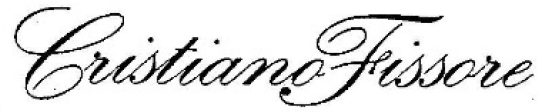
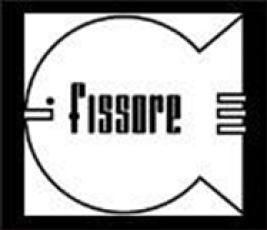
– The case concerned opposition proceedings against the application for the EU figurative mark Fissore for “clothing, footwear and headgear” in Class 25. The opposition was based on the earlier EU figurative mark CristianoFissore, covering goods in Classes 3, 18 and 25, and relied on the risk of confusion.
– The Opposition Division upheld the opposition in its entirety. The Fourth Board of Appeal of EUIPO dismissed the appeal brought by the applicant (Fissore Srl), confirming a likelihood of confusion for all the goods covered by the application.
– The applicant relied on two pleas: incorrect assessment of the relevant public, of the comparison of the goods and signs, of the earlier mark’s distinctiveness, and failure to take account of peaceful coexistence and limitation in consequence of acquiescence.
– The Court held that it had no jurisdiction to make declaratory findings (the applicant’s first head of claim) or to order EUIPO to register the mark (part of the second head of claim), but could examine the claim for alteration of the decision by dismissing the opposition.
– The Court declared inadmissible evidence (photographs of clothing) submitted for the first time before it, since review of the legality of a Board of Appeal decision must take place in the light of the factual and legal context as it stood before that Board.
– The Court confirmed that goods described as “clothing, footwear and headgear” in Class 25, absent any indication of a luxury character, are aimed at the general public with an average level of attention, regardless of the applicant’s actual market positioning as a luxury brand – actual use of a mark cannot alter the goods to be taken into account when assessing the likelihood of confusion.
– As regards the comparison of the goods, the Court confirmed partial identity (clothing and headgear) and average similarity (footwear) between the goods applied for and the goods for which genuine use of the earlier mark had been shown, rejecting the applicant’s arguments on price, quality and distribution-channel differences as ineffective, since they concerned actual rather than prospective use.
– As regards the comparison of the signs, the Court confirmed that, in the earlier mark, the element “Fissore” (a rare Italian surname) is more distinctive than the common first name “Cristiano”, whereas in the contested mark the word element “Fissore” and the stylised fish device are of equal weight, resulting in a low degree of visual similarity, an average degree of phonetic similarity, and no significant conceptual difference, since the stylised fish is too abstract to be spontaneously grasped by a significant part of the public.
– The Court confirmed the normal distinctive character of the earlier mark and the absence of proof of enhanced recognition, and rejected the complaint concerning peaceful coexistence, since the evidence produced related mainly to Italy (not the whole EU territory) and did not show actual, independent familiarity with each mark on the part of the public.
– The Court also rejected the plea based on Article 61 of Regulation 2017/1001, explaining that limitation in consequence of acquiescence applies only to use of a registered later EU trade mark, not to applications, and is not applicable in opposition proceedings.
– In its global assessment, the Court confirmed the existence of a likelihood of confusion, finding that the conceptual differences arising from the stylised fish were too limited to counteract the visual and phonetic similarities.
– The Court dismissed the action brought by Fissore Srl in its entirety. The case was won by Paraggi GmbH.
Case details: https://eur-lex.europa.eu/legal-content/EN/TXT/?uri=CELEX:62025TJ0060

Zobacz też:
Przegląd orzecznictwa TSUE od 21.09 do 25.09.2026
Wyrok – 23/09/2026 – Bitmain Technologies przeciwko EUIPO - Advanced New Technologies (ANTMINER), Sprawa T-409/25 Wcześniejszy znak Znak sporny ANT ANTCHAIN (Uprawniony: Advanced New Technologies Co. Ltd) ANTMINER (Uprawniony: Bitmain Technologies Inc.) – Sprawa...
Czy krótki wpis w mediach społecznościowych może być utworem? Wyrok TSUE z 3 września 2026 r. w sprawie C-598/24, CY przeciwko Gândul Media Network i HO
Wyrok TSUE z 3 września 2026 r. w sprawie C-598/24 (CY przeciwko Gândul Media Network i HO) dotyczy dwóch praktycznych kwestii. Pierwsza to granice pojęcia „utworu" w rozumieniu Dyrektywy 2001/29 w odniesieniu do tekstów publikowanych w sieci społecznościowej. Druga...
Przegląd orzecznictwa TSUE od 14.09 do 18.09.2026
Wyrok – 16/09/2026 – Fitmart przeciwko EUIPO (ULTRAPURE), Sprawa T-890/25 Znak sporny: Uprawniony: Fitmart GmbH & Co. KG – Sprawa dotyczyła rejestracji graficznego znaku towarowego ULTRAPURE dla towarów z klas 5, 29, 30 i 32, obejmujących m.in. suplementy diety,...