

Overview of CJEU case law from 21.09 to 25.09.2026
Judgment – 23/09/2026 – Bitmain Technologies v. EUIPO – Advanced New Technologies (ANTMINER), Case T-409/25
|
Earlier Mark |
Contested Mark |
|
ANT ANTCHAIN (Owner: Advanced New Technologies Co. Ltd) |
ANTMINER (Owner: Bitmain Technologies Inc.) |
– The case concerned an opposition to the registration of the word mark ANTMINER in respect of goods in Class 9 (computer hardware and ASICs for cryptocurrency mining, integrated circuit boards and modules, hardware cryptocurrency wallets, software for cryptocurrency mining and blockchain technology, and cryptographic keys). The opposition was based on the likelihood of confusion with the earlier word marks ANT and ANTCHAIN and, in the alternative, on the protection afforded to marks with a reputation.
– The Opposition Division upheld the opposition on the basis of the ANT mark. Bitmain lodged an appeal and, in parallel, filed an application for revocation (cancellation) of the ANT mark, as well as a request for a stay of the appeal proceedings, which the Board dismissed. The Fifth Board of Appeal dismissed the appeal, relying on the unchallenged ANTCHAIN mark and finding a likelihood of confusion.
– The applicant raised two pleas in law: first, infringement of the provisions governing the stay of proceedings and of the principles of equality before the law and impartiality; and, second, an erroneous assessment of the likelihood of confusion, concerning the level of attention of the relevant public, the similarity of the goods, the similarity of the marks and the distinctive character of their respective elements.
– The Court rejected the first plea, holding that the Board enjoys a broad discretion and that parallel proceedings do not automatically give rise to a stay. The opposition could be upheld on the basis of another, unchallenged mark, namely ANTCHAIN, with the result that the outcome of the proceedings concerning ANT was irrelevant. Furthermore, the applicant had failed to substantiate that plea.
– As regards the relevant public, the Court partially upheld the applicant’s arguments, finding that the level of attention was high in respect of all the goods, including hardware wallets and cryptographic keys, rather than “average to high”, as found by the Board, since the purchase of such goods involves prior consideration and the assets protected by them may be substantial. Accordingly, the level of attention is high in respect of all the goods, with the exception of software relating to blockchain technology, in respect of which the level of attention is average to high among the general public and high among professionals.
– The goods were found to be identical, since they fall within the broad categories of “computer hardware”, “software” and “firmware” covered by the earlier mark. The applicant had failed to establish any differences in their intended purpose, distribution channels or relevant public.
– As regards the distinctive elements, the Court held that the common element “ANT” refers to the insect and has no direct connection with the goods, and that it has an average degree of distinctive character. It is a common English word with a clear meaning, frequently used in technical fields, for example to describe small, networked or division-of-labour systems. The element “MINER” refers directly to persons engaged in cryptocurrency mining and to mining itself and therefore describes the intended purpose of the goods. It has a weak distinctive character and, in relation to goods used for cryptocurrency mining, is devoid of distinctive character. The element “CHAIN” refers, in this context, to blockchain and is descriptive and therefore devoid of distinctive character.
– As regards the comparison of the marks, the Court found that they are visually similar to an average degree. The common element “ANT”, which appears at the beginning of the marks, is the most distinctive element and the one most likely to remain in the consumer’s memory, whereas the longer elements “MINER” and “CHAIN” have a weak or no distinctive character. Phonetically, the marks are similar to an average degree for that part of the relevant public which does not pronounce the descriptive elements, and similar to a low degree for consumers who pronounce the marks in their entirety. Conceptually, the marks are similar to an average degree, since they share the same semantic content in the element “ANT”, while their second elements refer to related concepts in the field of information technology, namely cryptocurrency mining and blockchain.
– In its global assessment, the Court confirmed the existence of a likelihood of confusion, having regard to the identity of the goods, the similarity of the marks and the normal distinctive character of ANTCHAIN. Even a high degree of attention is insufficient to rule out a likelihood of confusion, since consumers only rarely have the opportunity to compare marks directly and must therefore rely on an imperfect recollection of them. The relevant public may therefore perceive ANTMINER as a variant of ANTCHAIN.
– The Court dismissed the action brought by Bitmain Technologies Inc. in its entirety and ordered the applicant to pay the costs of the proceedings. The proceedings were therefore decided in favour of Advanced New Technologies Co. Ltd.
Case details: https://eur-lex.europa.eu/legal-content/PL/TXT/?uri=CELEX:62025TJ0409
Judgments – 23/09/2026 – Deva v. EUIPO – Novartis (Devatis), Case T-232/25 and T-231/25
|
Earlier Mark |
Contested Mark |
|
NOVARTIS
(Owner: Novartis AG) |
(Owner: Deva Holding Anonim Şirketi) |

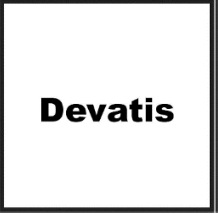
– The proceedings concerned oppositions filed by Novartis AG on 28 May 2020 against the grant of protection in the European Union to the figurative marks of Devatis in respect of goods in Class 5 (pharmaceutical products, food for babies, materials for stopping teeth, dental wax, preparations for destroying vermin, fungicides and herbicides). The oppositions were based on the protection afforded to a mark with a reputation. Novartis claimed that the NOVARTIS mark had a reputation and that use of the marks at issue without due cause would take unfair advantage of, or be detrimental to, the distinctive character or repute of that mark.
– The Opposition Division rejected both oppositions. The Fourth Board of Appeal of EUIPO upheld Novartis’s appeals, finding, contrary to the Opposition Division, that the relevant public would establish a link between the marks in respect of all the goods, that there was a risk of taking unfair advantage which was not merely hypothetical, and that the applicant had failed to demonstrate due cause for using the marks at issue.
– As regards the proximity of the goods, the General Court confirmed that the pharmaceutical goods covered by the mark at issue are identical to the ‘pharmaceutical products and substances’ covered by the earlier mark, or are directly connected with them, since they concern the same medical field and the same relevant public. The Court nevertheless held that the Board had not taken sufficient account of the more remote goods. “Food for babies”, “preparations for destroying vermin” and fungicides are similar to pharmaceutical products only to a low degree. ‘Materials for stopping teeth, dental wax’ and herbicides, on the other hand, are dissimilar to those products, owing to differences in their nature, intended purpose, distribution channels and relevant public.
– As regards the reputation of the earlier mark, the General Court distinguished between the circumstances in the two cases. In Case T-231/25, the Opposition Division, followed by the Board, had assumed, solely hypothetically and as part of a ‘best-case scenario for Novartis’, that the mark had a strong reputation in France and Germany. The General Court held that that approach was correct, since, when examining the protection of a mark with a reputation, EUIPO must either determine the strength of the reputation with precision or, at the very least, expressly take into account the scenario most favourable to the party that would otherwise lose. In Case T-232/25, by contrast, the Board made a substantive finding that the mark had a high reputation in France and Germany, and the General Court upheld that finding. That finding was based on the use of the mark as a “house mark” across a broad range of products, very high sales maintained over many years, substantial expenditure on advertising and marketing, and the highest market shares among the ten largest pharmaceutical companies in those countries. The General Court rejected the applicant’s arguments that a high reputation could be acquired only by global brands for everyday consumer goods and that the evidence related only to the company name rather than to the mark. It held that the test for reputation consists in determining whether the mark is known to a significant part of the public concerned by the goods or services in question, and that the applicant had adduced no evidence in support of its contention that consumers remember the names of medicines rather than their manufacturers. A sign used as a company name may also be used as a trade mark where it identifies goods, and NOVARTIS appears on packaging as a house mark. Nor does the statutory obligation to indicate the name of the manufacturer on medicinal packaging preclude that sign from performing an origin-indicating function.
– As regards the comparison of the marks, the General Court confirmed the Board’s findings, which were not disputed by the applicant: the word ‘novartis’ is perceived as having no meaning and has a normal degree of distinctive character, while the element ‘devatis’ constitutes the distinctive and dominant part of the mark at issue. The marks are visually and phonetically similar only to a low degree. They share the letters ‘va’ and the ending ‘tis’, but differ in their beginnings (‘de’ and ‘no’) and in the presence of the letter ‘r’ in the earlier mark, which affects their pronunciation. The figurative elements of the marks at issue (the different typeface, the black border in T-231/25, and the stylised letter ‘D’ in T-232/25) cannot be disregarded, although the word element will, as a general rule, have greater distinctive significance. The conceptual comparison is neutral, since neither of the marks has any meaning.
– The decisive issue was whether a link between the marks would be established. The General Court held that the Board had failed to take into account the fact that the level of attention of the relevant public was at least higher than average in respect of all the goods (goods relating to human and animal health, including goods available without a prescription), had incorrectly assessed the proximity of the goods, and had failed to take account of the low degree of similarity between the marks. The Court pointed out that the mere fact that the earlier mark has a high reputation does not automatically mean that the relevant public will establish a link between it and the later mark. The differences between the beginnings of the marks cannot be regarded as insignificant and give the marks a different overall impression. The Board therefore erred in finding that such a link would be established.
– Since the conditions for protection are cumulative, the General Court did not examine the issue of due cause. It upheld the action and annulled both decisions of the Board of Appeal. The proceedings were therefore decided in favour of Deva Holding Anonim Şirketi.
Case details: https://eur-lex.europa.eu/legal-content/PL/TXT/?uri=CELEX:62025TJ0232 https://eur-lex.europa.eu/legal-content/PL/TXT/?uri=CELEX:62025TJ0231

Zobacz też:
Przegląd orzecznictwa TSUE od 21.09 do 25.09.2026
Wyrok – 23/09/2026 – Bitmain Technologies przeciwko EUIPO - Advanced New Technologies (ANTMINER), Sprawa T-409/25 Wcześniejszy znak Znak sporny ANT ANTCHAIN (Uprawniony: Advanced New Technologies Co. Ltd) ANTMINER (Uprawniony: Bitmain Technologies Inc.) – Sprawa...
Czy krótki wpis w mediach społecznościowych może być utworem? Wyrok TSUE z 3 września 2026 r. w sprawie C-598/24, CY przeciwko Gândul Media Network i HO
Wyrok TSUE z 3 września 2026 r. w sprawie C-598/24 (CY przeciwko Gândul Media Network i HO) dotyczy dwóch praktycznych kwestii. Pierwsza to granice pojęcia „utworu" w rozumieniu Dyrektywy 2001/29 w odniesieniu do tekstów publikowanych w sieci społecznościowej. Druga...
Przegląd orzecznictwa TSUE od 14.09 do 18.09.2026
Wyrok – 16/09/2026 – Fitmart przeciwko EUIPO (ULTRAPURE), Sprawa T-890/25 Znak sporny: Uprawniony: Fitmart GmbH & Co. KG – Sprawa dotyczyła rejestracji graficznego znaku towarowego ULTRAPURE dla towarów z klas 5, 29, 30 i 32, obejmujących m.in. suplementy diety,...