

Overview of CJEU case law from 28.05 to 09.06.2026
1. Judgment T-104/25 Lami Packaging / EUIPO – Tetra Laval (Shape of an octagonal carton)
- The case concerned an application for a declaration of invalidity of a three-dimensional EU trade mark representing the shape of an octagonal carton, registered for goods in class 16 including „Packaging and packaging materials of paper or plastic-laminated paper”.
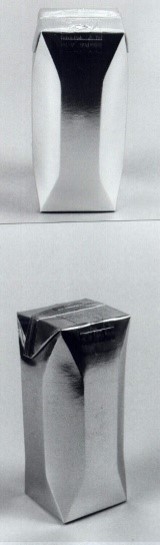
- The application for a declaration of invalidity of the trade mark, originally applied for on 19 April 2000, was filed by the applicant, Lami Packaging (Kunshan) Co. Ltd, on 3 January 2022, on the basis of Article 51(1)(a) in conjunction with Article 7(1)(e)(ii) of Regulation No 40/94, concerning signs consisting exclusively of the shape of goods necessary to obtain a technical result.
- By decision of 6 November 2023, the Cancellation Division of EUIPO upheld the applicant’s request and invalidated the contested trade mark due to the technical functionality of its shape.
- The Fourth Board of Appeal of EUIPO, after examining the appeal filed by the proprietor of the mark (the intervener Tetra Laval Holdings & Finance SA), annulled the Cancellation Division’s decision and dismissed the application for invalidity by decision of 6 December 2024 (case R 12/2024-4).
- The Board of Appeal based its decision on the finding that Article 7(1)(e)(ii) of the regulation does not apply to the case, because the technical characteristics of the shape (consisting in reducing material consumption) relate solely to the production (manufacturing) process, and not to the way the goods themselves function during their use by the consumer.
- The applicant appealed the above decision to the General Court of the European Union, which heard the case in the extended composition of the Seventh Chamber (five judges) under the presidency of Judge K. Kecsmár.
- The Court confirmed the correctness of the general interpretation of the concept of „technical result” adopted by the Board of Appeal, recalling that, according to the judgment in the Nestlé case (C-215/14), the ground for refusal in question concerns the behavior and functioning of the finished goods during use, rather than the technology of their production.
- The Court held, however, that the Board of Appeal made an error in the assessment of the facts, unjustifiably assuming that the technical features of the contested carton are limited only to the production stage and have no impact on the subsequent functioning of the product.
- The Court distinguished four essential geometric characteristics of the contested sign – the octagonal shape, concave corners, tapering walls, and the top sealing joint – analyzing their direct, technical impact on the process of using the goods by the relevant public.
- With regard to professional customers (the food industry), the Court pointed out that the goods are empty packaging purchased in order to be filled with liquids, and the contested shape provides them with the necessary stability, rigidity, and stackability, which facilitates safe storage, shipping, and logistics in the supply chain.
- In terms of optimizing the consumption of raw materials, the Court found that the prismatic structure of the packaging optimizes the ratio of volume to material used, thereby reducing the weight and dimensions of the carton while maintaining its full capacity, which constitutes a real technical facilitation in transport sought by businesses.
- Regarding end consumers, the Court, referring to the intervener’s patent specifications (PCT/WO1997034809) and its advertising materials, demonstrated that the ergonomic design with concave corners facilitates gripping and holding the packaging stably in the human hand during the direct consumption of the beverage.
- The Court recalled that the prohibition of registration under Article 7(1)(e)(ii) does not require the shape to achieve a revolutionary or improved technical effect (which is the domain of patent law), but it is sufficient that it is simply necessary to obtain a specific technical result, which renders arguments about the existence of alternative shapes on the market legally irrelevant.
- The Court emphasized that any potential aesthetic qualities or the unusual, attractive appearance of the carton’s beveled corners do not preclude the application of the absolute ground for refusal if the key elements of that shape simultaneously fulfill an important technical role.
- Consequently, the Court annulled the contested decision of the Fourth Board of Appeal of EUIPO of 6 December 2024.
- Acting on the basis of its reformatory powers, the Court altered the contested decision by dismissing the appeal brought by Tetra Laval Holdings & Finance SA against the earlier decision of the Cancellation Division, which results in the final removal of the trade mark from the register.
- The Court ordered EUIPO to bear its own costs and to pay the costs incurred by Lami Packaging (Kunshan) Co. Ltd, while ordering the intervener (Tetra Laval Holdings & Finance SA) to bear its own costs of the proceedings.
- Case details: https://eur-lex.europa.eu/legal-content/PL/TXT/?uri=CELEX:62025TJ0104.
2. Judgment T-267/25 Osculati / EUIPO – Olymp Bezner (O)
- The case concerned an action brought by the company Osculati Srl against a decision of the Fourth Board of Appeal of EUIPO concerning an international registration designating the European Union for a figurative trade mark representing a stylized, vertically intersected letter „O” in color versions.

- The application for the contested trade mark was made for goods belonging to class 25 of the Nice Classification, covering in particular clothing such as jackets, sports jackets, rainwear, coveralls, gloves, T-shirts, as well as footwear, including rain boots and deck shoes.
- The opposition to this registration was filed on 16 February 2022 by Olymp Bezner KG, which relied on its earlier EU figurative trade mark representing a stylized letter „O” (in the form of a closed figure with a horizontal intersection in the lower part), also registered for class 25 goods, such as shirts, blouses, pajamas, ties, sweaters, polo shirts, T-shirts, belts, and socks.

- The Opposition Division of EUIPO dismissed the opposition in its entirety by decision of 5 April 2023, concluding in its assessment that there was no likelihood of confusion among consumers between the conflicting signs.
- As a result of the appeal lodged by Olymp Bezner KG and after a complex procedural course, which included, inter alia, the earlier annulment of its own decision by the appellate bodies, the Fourth Board of Appeal of EUIPO issued a final decision on 25 February 2025, upholding the appeal and altering the Opposition Division’s decision.
- The Board of Appeal found the opposition well-founded, relying, inter alia, on new evidence submitted by Olymp Bezner KG only at the appeal stage (including Statista market statistical data, press clippings, and photographs), which in the Board’s view confirmed the enhanced distinctive character of the earlier mark on the German market and consequently led to a finding of a likelihood of confusion.
- The applicant, Osculati Srl, brought an action before the General Court of the European Union, seeking the annulment of the Board of Appeal’s decision.
- The action raised two main pleas in law: first, infringement of Article 95(2) of Regulation 2017/1001 due to the Board of Appeal’s erroneous and unjustified admission of late evidence; secondly, infringement of Article 8(1)(b) of the same regulation by incorrectly concluding that there was a likelihood of confusion in the case.
- In assessing the first plea, the Court recalled that Article 95(2) of Regulation 2017/1001 grants EUIPO broad discretionary powers (administrative discretion) to take into account facts and evidence which were not submitted by the parties in due time.
- The Court pointed out that, pursuant to Article 27(4) of Regulation 2018/625, the Board of Appeal has the right to accept such late evidence, provided it is prima facie relevant to the outcome of the case and serves to supplement or support materials that the party correctly submitted at an earlier stage of the dispute.
- The Court considered the Board of Appeal’s action to be fully correct, explaining that since Olymp Bezner KG had already submitted extensive evidence before the Opposition Division intended to prove intensive use of the mark, the new documents in the form of Statista data and press articles constituted only a justified, subsidiary supplement, being a direct response to the reasoning and the negative assessment of the first-instance body.
- The Court categorically rejected the applicant’s claims that the condition for admitting such evidence was for the party to demonstrate that its earlier collection and submission had been objectively impossible for reasons beyond its control; consequently, the first plea of the action was dismissed.
- Proceeding to the analysis of the second plea concerning the likelihood of confusion, the Court defined the relevant public, indicating that class 25 goods are mass-market items, are aimed at the general public, and are characterized by an average level of consumer attention during purchase.
- The Court fully rejected the arguments of Osculati Srl, which maintained that its goods are highly specialized and intended exclusively for the professional nautical and water sports sectors, emphasizing that rain jackets, coveralls, or deck shoes are commonly purchased and worn by ordinary consumers as everyday functional clothing.
- Regarding the comparison of the goods, the Court confirmed the Board of Appeal’s findings on the existence of an average degree of similarity between the assortments of both companies, indicating that the clothing and footwear offered by Osculati and the shirts and sweaters of Olymp Bezner share the same general purpose (protection and covering of the body), are manufactured from analogous raw materials by the same market entities, and are distributed through the same trade channels.
- When making a visual comparison of the signs, the Court found an average degree of similarity between them, arguing that the majority of consumers would immediately perceive a stylized letter „O” in both marks, based on an identical rectangular structure with rounded corners, with very similar geometric proportions and thickness of graphic lines.
- The Court considered that the existing differences – consisting of a vertical cut in the applied mark and a horizontal cut in the earlier mark, as well as the presence of colors in Osculati’s design – are of secondary importance and cannot neutralize the strong, convergent overall impression. The Court added that even in a scenario where the consumer does not identify the letter „O” in them, both symbols will remain similar as very closely related geometric forms.
- Phonetically, the Court found the signs to be identical for that part of the public which would read them as the letter „O”, while conceptually it deemed a comparison impossible, since neither sign has an independent, specific semantic meaning in relation to clothing.
- Assessing the likelihood of confusion, the Court held that the average consumer could perceive the products bearing the trade marks in question as originating from the same undertaking. Therefore, the Court dismissed the action and upheld the Board of Appeal’s decision.
- Case details: https://eur-lex.europa.eu/legal-content/PL/TXT/?uri=CELEX:62025TJ0267.
3. Judgment T-284/25 Amber Latvijas balzams / EUIPO – Foodcare (BLACK)
- The case concerned an application for a declaration of invalidity of the figurative EU trade mark „BLACK”, registered to the intervener (Foodcare sp. z o.o.) on the basis of an application of 29 July 2019, in relation to class 33 goods, including alcoholic beverages.

- The application for a declaration of invalidity was filed on 9 February 2023 by the applicant company Amber Latvijas balzams AS, which accused the intervener of acting in bad faith when filing the contested mark, which constitutes a ground set out in Article 59(1)(b) of Regulation 2017/1001.
- On 19 February 2024, the Cancellation Division of EUIPO dismissed the application in its entirety, finding that the applicant had not proven that the intervener acted in bad faith at the time of filing the trade mark application.
- On 18 April 2024, the applicant filed an appeal against this decision, which was dismissed by the decision of the First Board of Appeal of EUIPO of 3 March 2025. The Board concluded that in light of the chronology of events and the evidence provided, the intervener’s bad faith was not demonstrated.
- The applicant brought an action before the Court, basing it on a single plea alleging infringement of Article 59(1)(b) of Regulation 2017/1001.
- The Court recalled that the concept of „bad faith” presupposes a dishonest state of mind or intention, which must be assessed objectively on the basis of all the factual circumstances of the case, and good faith is presumed until proven otherwise.
- The Court also emphasized that bad faith cannot be presumed solely on the basis of the fact that, at the time of filing the mark, the applicant did not conduct business activity corresponding to the goods indicated in the application.
- Referring to the applicant’s arguments, the Court rejected the claim that the intervener’s removal of alcohol-related activity from the Polish business register shortly before applying for the mark proved a lack of intention to use it. The Court pointed out that this action resulted from adapting to changes in Polish law (limiting the number of registered activities to a maximum of 10) and government recommendations, and does not constitute evidence of bad faith.
- The Court dismissed the argument that restrictions in Polish law concerning the advertising and promotion of alcohol make it impossible to use the BLACK mark for alcoholic beverages and demonstrate a lack of such intention on the part of the intervener. It was noted that the EU trade mark system is autonomous, and the intervener could implement a marketing strategy and lawfully use the mark for alcoholic beverages in other EU Member States.
- The Court rejected the plea of infringement of the principle of the unitary character of the EU trade mark, explaining that difficulties in selling certain goods in one Member State (Poland) due to national advertising bans do not equate to the existence of an absolute ground for refusal of registration based on bad faith from an EU-wide perspective.
- The Court did not share the argument concerning alleged market practices according to which companies in the non-alcoholic beverage sector do not expand their activities to alcoholic beverages, considering these claims to be irrelevant for assessing the legality of such actions.
- Assessing the factual analysis carried out by the Board of Appeal, the Court confirmed that this body did not rely solely on the similarity between non-alcoholic and alcoholic beverages, but objectively analyzed all the circumstances invoked by the applicant and rightly excluded bad faith.
- Finally, the Court found that the Board of Appeal correctly interpreted the concept of bad faith and did not rule out in advance the possibility of relying on a lack of intention to use the mark, but concluded that such a lack of intention in these specific factual circumstances had not been proven.
- In light of the above, the Court dismissed the only plea of the action in its entirety and thus dismissed the action in its entirety.
- The Court ordered the applicant (Amber Latvijas balzams AS), as the unsuccessful party, to pay the costs of the proceedings incurred by EUIPO and the intervener.
- Case details: https://eur-lex.europa.eu/legal-content/PL/TXT/?uri=CELEX:62025TJ0284.
4. Judgment T-307/25 Societatea Română de Endocrinologie / EUIPO – Acta Endocrinologica (Acta Endocrinologica (Buc))
- The case concerned an action brought by Societatea Română de Endocrinologie seeking the annulment of a decision of the Fourth Board of Appeal of EUIPO concerning an opposition to the registration of an EU trade mark.
- The application for the contested figurative trade mark containing the word element „Acta Endocrinologica (Buc)” was filed by the intervener (Acta Endocrinologica) on 14 March 2023, in relation to services in class 39 (delivery, dispatch, and distribution of newspapers and magazines) and class 44 (compilation and issuing of medical reports).

- On 19 May 2023, the applicant filed an opposition to the registration of this mark, relying on its earlier EU word mark „ACTA ENDOCRINOLOGICA (BUC), The international Journal of Romanian Society of Endocrinology / Registered in 1938 New series”, which covered, inter alia, class 16 goods (publications, printed matter, magazines, books).
- The ground for opposition was Article 8(1)(b) of Regulation 2017/1001, i.e., the likelihood of confusion on the part of the public.
- By decision of 8 August 2024, the Opposition Division of EUIPO rejected the opposition in respect of the services in classes 39 and 44, after which the applicant lodged an appeal against that decision on 16 August 2024.
- In its decision of 27 March 2025, the Fourth Board of Appeal of EUIPO dismissed the appeal, relying on the finding that the goods and services of both parties are not similar, which in itself eliminates one of the cumulative conditions necessary to establish a likelihood of confusion.
- The applicant brought an action before the Court, raising a single plea of infringement of Article 8(1)(b) of the regulation and arguing that the goods in class 16 and the services in classes 39 and 44 are indeed similar, which generates a risk of confusion.
- At the outset, the Court deemed inadmissible the evidence (Annex A.8, consisting of a printout from the applicant’s website) which was submitted for the first time at the stage of the proceedings before the Court, arguing that the review of the legality of an act is based on the factual and legal context known to the bodies during the earlier proceedings.
- On the issue of assessing the similarity of the services in class 39 (delivery) and the goods in class 16 (printed matter), the Court confirmed the Board of Appeal’s position, demonstrating their different nature, intended purpose, and distribution channels. The Court noted that class 39 services involve physical transport carried out by specialized companies, whereas class 16 goods are information carriers produced in printing houses and distributed, for example, in bookstores.
- The Court rejected the applicant’s claims that the class 39 services were solely related to the distribution of its specific endocrinological magazine, recalling that the comparison must be based on the objective list of goods and services in the application, and this generally concerned the „delivery of newspapers and magazines”, without any field-specific narrowing.
- The Court also found no complementarity between these classes, pointing out that consumers are aware that publishing publications and the physical service of delivering them are tasks carried out by completely separate market entities.
- When conducting the analysis in relation to the services in class 44 (compilation of medical reports), the Court emphasized that these are highly specialized services, usually provided by doctors, which show no similarity to the goods in class 16, covering general categories of printed matter not directed exclusively to medical circles.
- The Court summarized that in the case of an undisputed lack of similarity between the goods and services of the conflicting marks, the likelihood of confusion is excluded in advance, which makes it unnecessary to carry out a comprehensive, global assessment of the other conditions.
- Due to the unfounded nature of the single plea raised, the Court dismissed the action in its entirety.
- The Court ordered the applicant (Societatea Română de Endocrinologie) to bear its own costs and the costs of the intervener, while EUIPO was ordered to bear its own costs.
- Case details: https://eur-lex.europa.eu/legal-content/PL/TXT/?uri=CELEX:62025TJ0307.

See more:
AI Legal landscape – how does the European Union regulate artificial intelligence?
AI Legal landscape – how does the European Union regulate artificial intelligence? The growing scale of artificial intelligence applications and the emergence of new legal and social challenges have led to the adoption by the EU of the first comprehensive regulations...
Overview of CJEU case law from 6.07 to 10.07.2026
Judgment – 09/07/2026 – Anne Frank Fonds, Case C‑788/24 – The case concerned a request for a preliminary ruling regarding the interpretation of the concept of “communication to the public” under Article 3(1) of Directive 2001/29, as well as the assessment of the...
Overview of CJEU case law from 29.06 to 03.07.2026
Attilah v EUIPO – Bella Tawziaa II and Groupe Bellakhdar, Case T‑654/24 – The case concerned invalidity proceedings against an EU trade mark on the ground that the application had been filed in bad faith within the meaning of Article 52(1)(b) of Regulation No...